Offshore supply chain bottlenecks carry massive hidden costs for industrial operations. Unexpected downtime halts production lines instantly. Prolonged lead times for custom or non-standard seal dimensions compound this daily stress. Operations managers cannot afford to wait weeks for a single vital component. Local manufacturing serves as a strategic operational advantage rather than a mere logistical convenience. It offers immediate oversight and strict quality control. You gain rapid turnaround times when critical emergencies strike. This article provides a transparent look onto the production floor. We will demonstrate how precise manufacturing controls directly influence seal longevity. You will learn why local agility ensures true equipment reliability. We also explore material selection, machining methods, and strict quality assurance protocols.
Key Takeaways
Local production significantly reduces turnaround times for prototyping and emergency replacement of custom-diameter seals.
The manufacturing method (CNC machining vs. injection molding) must align with volume requirements and tolerance specifications.
Material selection (PTFE, Polyurethane, NBR) dictates performance, but strict environmental controls during production dictate consistency.
Evaluating a diameter hydraulic seal maker requires assessing their testing protocols, not just their catalog dimensions.
The Hidden Costs of Seal Failure and the Case for Local Agility
Many buyers focus entirely on the low initial unit cost of imported seals. They often ignore the cascading consequences of a sudden blowout. Machine downtime costs facilities thousands of dollars per hour. Fluid loss creates severe environmental hazards. It also forces expensive and time-consuming cleanup procedures. Expedited shipping during a critical failure drains maintenance budgets rapidly. A cheaper overseas seal quickly becomes an operational financial disaster.
True procurement success looks very different from simply chasing the lowest bid. You need highly predictable lead times. You require verifiable quality control at every step. You also need engineering support operating in your exact time zone. When you can call an engineer directly, problem-solving accelerates. Clear communication prevents minor misunderstandings from causing major production delays.
Local production facilities mitigate massive operational risks through pure agility. They allow for rapid iterative adjustments. During the prototyping phase of custom-diameter applications, engineers can modify CAD designs within hours. You do not wait months for new samples to cross an ocean. If a specific profile extrudes under high pressure, a local team tweaks the geometry immediately. This iterative speed gets your equipment back online faster. It ensures the final design actually withstands your specific field conditions.
Step-by-Step: The Manufacturing Process of a Hydraulic Seal
Raw material preparation sets the absolute baseline for long-term success. The intake process involves rigorous baseline inspection of raw polymers and elastomers. Manufacturers check billets and tubes for density variations. They must control ambient temperature and humidity strictly within the facility. High humidity degrades materials like polyurethane before production even begins. Proper climate control prevents this invisible moisture absorption. It ensures the polymer chains remain robust and ready for machining.
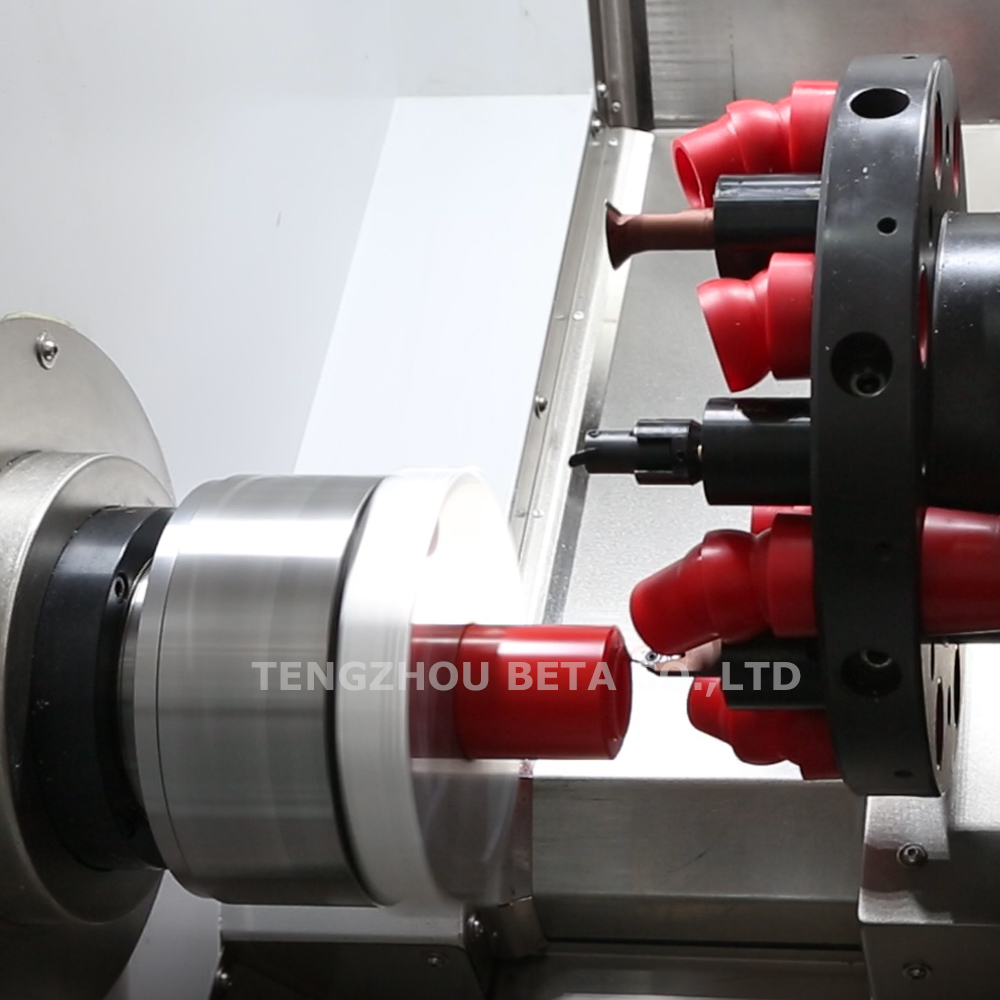
Next, we must evaluate machining versus molding. We divide these into two distinct solution categories. CNC turning excels for custom, low-to-medium volume production. It handles large-diameter seals perfectly. This method eliminates upfront tooling costs entirely. It guarantees rapid deployment for urgent replacement needs. Conversely, injection molding suits high-volume, standardized runs. It requires significant upfront tooling investments but lowers the per-unit cost over massive quantities.
Manufacturing Method Comparison Chart
Manufacturing Method
Ideal Volume
Tooling Costs
Lead Time
Best Application
CNC Machining
Low to Medium (1 - 1,000)
Zero
24 hours to a few days
Custom sizes, emergencies, large diameters
Injection Molding
High (10,000+)
High (Mold creation)
4 to 12 weeks
Standardized OEM components
Post-processing finalizes the product for actual field deployment. Machining leaves microscopic artifacts behind. Technicians deburr edges meticulously to prevent sharp edges from catching on cylinder walls. They apply specific curing and thermal treatments. These precise steps relieve internal material stresses generated during the cutting process. Proper thermal treatment ensures the seal meets exact operational specifications. It guarantees the component operates without microscopic flaws under high pressure.
Precision Engineering: Why Your Diameter Hydraulic Seal Maker Matters
We must evaluate engineering features based entirely on operational outcomes. Dimensional tolerances dictate actual system survival. Inner Diameter (ID), Outer Diameter (OD), and Cross-Section require absolute precision. A deviation of mere fractions of a millimeter causes disaster. It leads to severe extrusion or sudden bypass leaks. A specialized Diameter Hydraulic Seal Maker adjusts tooling dynamically. They program complex offsets to account for thermal expansion during the cutting process. They also calculate the exact post-production shrinkage of different materials. PTFE behaves differently than NBR after machining.
Application-specific customization prevents premature wear and catastrophic failure. Operating pressure shapes the required seal profile heavily. High-pressure systems demand robust anti-extrusion rings. The fluid type dictates the specific polymer choice. Mineral oil requires different elastomers than water-glycol mixtures. Certain fluids cause standard rubbers to swell and degrade. Friction limits also determine the specific profile design machined directly into the seal. High-speed pneumatic applications require low-friction lip designs to prevent heat buildup. Your manufacturing partner must understand these exact dynamics.
Quality Assurance, Compliance, and Verifiable Testing
Reliable manufacturing relies heavily on authoritative industry frameworks. ISO standards govern dimensional verification practices. They mandate strict material traceability from raw billet to finished seal. ISO 3601, for example, dictates precise tolerances for O-rings and fluid power seals. A local manufacturer adhering to these frameworks provides peace of mind. You know exactly what material enters your hydraulic cylinder.
Evidence-oriented testing proves product viability before shipping. Quality teams use advanced optical measurement systems. These non-contact devices verify complex profiles without causing physical deformation. Traditional calipers often squeeze soft polymers. This squeezing gives completely false readings. Optical systems project the seal profile onto a screen. They compare it directly against the original CAD drawing.
Batch testing evaluates structural integrity under stress. Technicians test for tensile strength and extrusion resistance. They measure the compression set to predict long-term memory loss. A high compression set means the seal stays flat after pressure drops. Flat seals leak immediately upon repressurization. We acknowledge no manufacturing process is completely flawless. However, rigorous local QA catches anomalies early. They prevent catastrophic end-user failures entirely. This transparency builds lasting trust between engineers.
Implementation Risks and Rollout Considerations
Switching to a new local supplier creates initial friction. Changeover realities involve inevitable administrative hurdles. You must dedicate time for engineering drawings and approvals. You must complete thorough material validation against legacy specs. Rushing this process leads to compatibility issues. Open communication smooths this necessary transition phase.
First-Article Inspection (FAI) mitigates this exact transition risk. Standard procedure demands approving prototype seals rigorously. You install the prototype in a live cylinder environment. You observe performance under real pressure and temperature spikes. You measure fluid bypass meticulously. You only commit to full-scale production runs after successful live testing. FAI protects your larger investment.
Inventory integration requires a highly phased and logical approach. You should not discard your current stock immediately. Instead, phase locally produced seals into your existing maintenance, repair, and operations (MRO) inventory seamlessly. Follow a structured integration path.
Steps for Seamless Inventory Integration
Identify critical fast-moving seals prone to failure.
Establish a minimum viable safety stock with the new local supplier.
Phase in locally produced seals gradually as legacy stock depletes.
Monitor field performance and wear rates against legacy components.
Expand the local procurement catalog based on successful field data.
Shortlisting Logic: Selecting the Right Manufacturing Partner
Selecting the right manufacturing partner demands a clear evaluation framework. You must ask specific questions about their operational capabilities. Assess their engineering support directly. Do they simply cut to a drawing blindly? Do they consult on material upgrades based on failure analysis? You want a partner, not just an order taker.
Production Flexibility: Can they seamlessly pivot from a single emergency large-diameter seal to a continuous OEM production run?
Material Expertise: Do they understand the thermal limits of PTFE, Polyurethane, and NBR?
Transparency: Do they allow facility audits? Do they provide clear documentation of material origin upon request?
A reputable Diameter Hydraulic Seal Maker will answer yes to these questions confidently. They welcome site visits. They proudly explain their tooling choices. As a next step, procurement and engineering teams should act immediately. Request a material consultation today. Submit a CAD drawing for an initial manufacturability assessment. Proactive vendor qualification prevents reactive downtime emergencies.
Conclusion
A hydraulic seal remains a highly engineered component essential to heavy machinery. Local production offers unmatched oversight, impressive speed, and precise customization. It eliminates the crippling delays of global shipping bottlenecks. Partnering with a transparent manufacturer bridges a vital engineering gap. It connects theoretical CAD design directly to real-world durability. It ensures your equipment runs efficiently without unexpected leaks. Connect with your local engineering team immediately. Audit your current seal performance thoroughly. Request a custom prototype quote to secure your fluid power operations for the future.
FAQ
Q: How long does it take to manufacture a custom diameter hydraulic seal locally?
A: Local CNC machining provides rapid turnarounds. A facility can produce emergency custom seals in 24 to 48 hours. Standard production runs take a few days. Injection molded parts require longer lead times, often spanning weeks, due to complex mold creation.
Q: Does CNC machining provide the same surface finish as molded seals?
A: Yes, it often exceeds it. Advanced CNC lathes use specialized cutting tools and optimized feed rates. This creates exceptionally smooth surface finishes. Molded seals sometimes suffer from parting lines or flash, which CNC machined seals completely avoid.
Q: What information does a diameter hydraulic seal maker need to quote a custom part?
A: A qualified Diameter Hydraulic Seal Maker requires specific inputs. You must provide rod and bore dimensions. They also need the operating pressure, temperature range, fluid medium, and operational speed to recommend the best material.
Q: Can local manufacturers match the scalability of overseas suppliers?
A: Absolutely. Local manufacturers utilize highly scalable automated CNC cells. These machines run continuously with minimal supervision. Localized tooling partnerships also handle smooth transitions to high-volume injection molding when production demands scale up dramatically.
TENGZHOU BETA CO.,LTD is located in Tengzhou City, Shandong Province. Our company is a professional manufacturer and exporter of machine tool equipments and accessories.