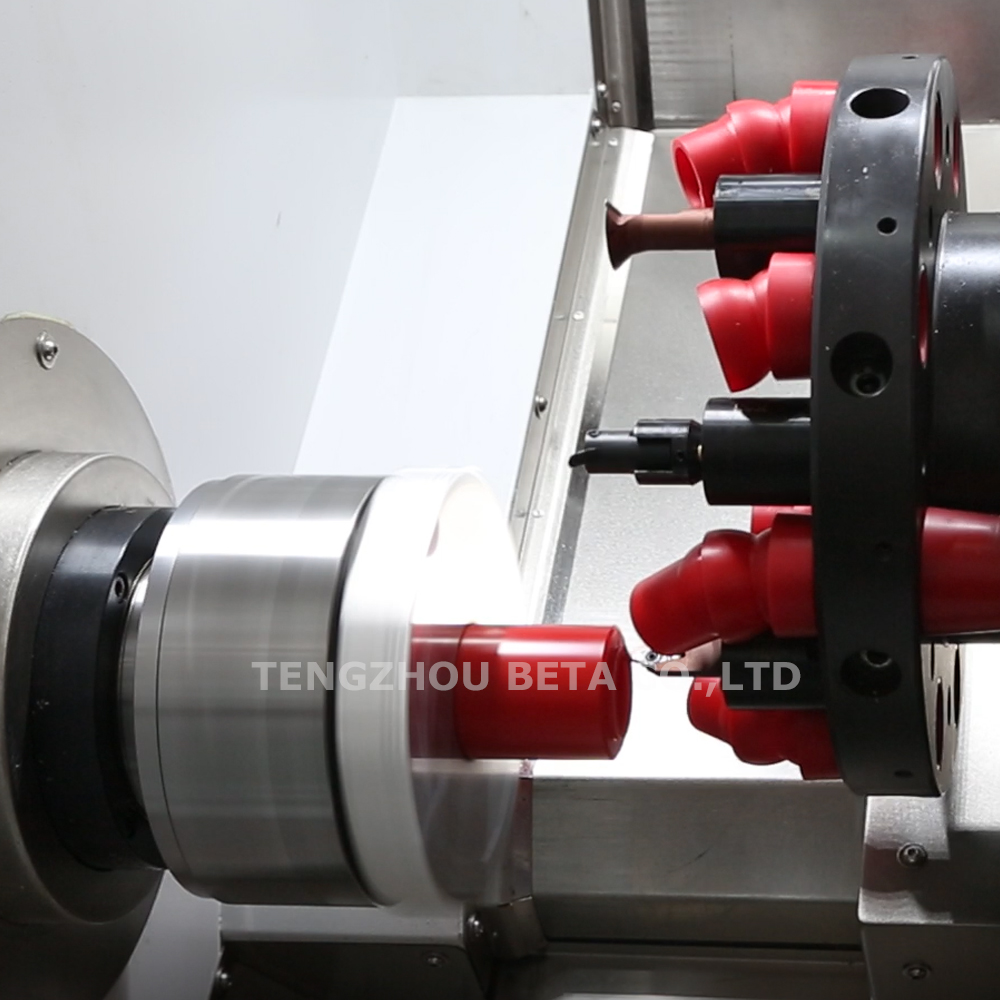
Capital equipment procurement always carries incredibly high stakes for manufacturers. Buying a precision CNC lathe represents a multi-decade commitment. Specification mismatches directly impact your profit margins and production cycle times. We must shift our focus from basic part turning to high-stakes precision machining. In these advanced environments, material waste and micro-inconsistencies are completely unacceptable. A minor deviation can quickly ruin entire production batches. To maximize your investment return, you must evaluate machines far beyond basic spec sheets. Buyers need to thoroughly scrutinize thermal stability and application-specific architectures, such as advanced polymer cutting capabilities. In this guide, you will learn how to define measurable success criteria for your next equipment purchase. We will explore core machine architecture, specialized tooling requirements, and practical implementation realities. Ultimately, you will discover actionable strategies to shortlist vendors and secure the exact machinery you require.
Key Takeaways
Machine rigidity and thermal compensation are the primary drivers of tolerance consistency in continuous production.
Specialized production—such as utilizing a dedicated CNC seal turning lathe—requires different spindle speeds and tooling configurations than standard metalworking.
Vendor evaluation must prioritize post-installation support, spare parts availability, and software integration capabilities over baseline purchase price.
Mitigating implementation risk requires upfront time studies and physical test cuts before finalizing the purchase order.
Defining Success Criteria for Precision CNC Lathe Investments
Buyers often fixate on the upfront purchase price. They ignore hidden costs lurking behind standard specifications. High scrap rates destroy daily profit margins. Unexpected machine downtime halts entire production lines. Excessive setup times eat into available cutting hours. You must look beyond the initial invoice. Purchasing decisions require a clear evaluation of daily production realities.
Establishing rigid baselines prevents costly specification errors. You should define measurable success criteria before contacting any machine tool builders. Consider tracking the following primary metrics:
Overall Equipment Effectiveness (OEE) targets: Determine acceptable uptime percentages for your specific shifts.
Targeted cycle time reductions: Calculate the exact seconds required to justify the new equipment cost.
Required tolerance thresholds: Establish hard limits for sub-micron capabilities on your most complex geometries.
Do not fall into the speed trap. Faster spindle speeds do not automatically guarantee higher production throughput. Tool vibration easily ruins surface finishes. Poor machine rigidity introduces chatter marks into the material. Scrapping faster simply produces more waste in less time. You must balance maximum spindle RPM against overall structural stiffness. Precision machining demands absolute stability under heavy cutting loads.
Evaluating Machine Architecture: Features to Production Outcomes
Spindle Rigidity and Runout Metrics
The spindle acts as the beating heart of any precision lathe. Bearing design directly dictates cutting accuracy. High-precision angular contact bearings provide necessary axial support. Spindle mass heavily influences vibration absorption. Heavy spindles resist deflection during aggressive material removal. This rigidity allows the machine to hold exceptionally tight tolerances. You can confidently process difficult aerospace alloys or hardened steels. Runout metrics determine true rotational accuracy. You should demand runout specifications measured in sub-micron increments.
Thermal Stability and Compensation
Continuous operation introduces severe environmental challenges. Friction generates massive amounts of internal heat. Heat naturally alters machine geometry over a long shift. Cast iron beds expand unevenly. Thermal displacement pushes the cutting tool off its programmed path. You must require active thermal mapping solutions. High-end machines utilize multiple temperature sensors distributed across the casting. The control system reads these sensors and offsets tool positions dynamically. Chilled coolant systems also provide essential temperature regulation. They prevent the cutting zone from overheating during deep boring cycles.
Control Systems and Processing Power
Modern machine controls operate like advanced industrial computers. You must evaluate the user interface carefully. Systems like FANUC and Siemens offer distinct operational philosophies. Processing power determines how smoothly the machine executes complex toolpaths. Look-ahead capabilities read thousands of code blocks in advance. This prevents the tool from stuttering during intricate curve interpolations. Operator adoption relies heavily on intuitive control layouts. Clunky interfaces cause excessive setup delays. You want software ecosystems designed for rapid programming adjustments.
Specialized Capabilities: Evaluating a CNC Seal Turning Lathe
Standard metalworking lathes excel at cutting steel and aluminum. They often fail miserably when machining flexible polymers. Elastomers require completely different cutting physics. Categorizing your exact solution prevents costly mismatches. You must match the machine architecture to the material profile.
Manufacturers processing elastomers, polyurethanes, and PTFE face unique challenges. For these applications, investing in a dedicated CNC Seal turning lathe is an absolute necessity. Specialized architectures prevent material tearing. They handle the elastic nature of polymer billets effortlessly.
Seal turning requires distinct speed and feed strategies. Cutting soft polymers demands incredibly high spindle RPM. Specialized tooling slices through the material rather than pushing it. This approach achieves exact lip geometries. Standard speeds simply deform the polymer during the cut. Precise surface finishes dictate whether a hydraulic seal holds pressure or fails immediately.
Holding flexible materials requires advanced clamping systems. Standard hydraulic jaw chucks crush soft polyurethane billets. A vacuum clamping system provides uniform holding force. This prevents part distortion during aggressive turning cycles. Suction safely secures the polymer without altering its structural integrity.
Using a retrofitted metal lathe for high-volume seal turning introduces severe risks. Microscopic surface defects frequently occur on the seal lips. These tiny imperfections create fluid leak paths. Consequently, failure rates skyrocket in the final fluid control applications. Dedicated machinery eliminates this expensive trial-and-error process.
Table: Architectural Differences in Turning Platforms
Feature Category
Standard Metal Lathe
Dedicated Polymer Lathe
Workholding Approach
High-pressure hydraulic jaw chucks
Low-distortion vacuum clamping systems
Spindle Dynamics
High torque, moderate RPM limits
Extreme high RPM, low-vibration tuning
Tooling Geometry
Negative rake inserts for chip breaking
Razor-sharp positive rake for slicing
Coolant Strategy
High-pressure flood coolant
Often dry cutting or air blast systems
Implementation Realities: Mitigating Rollout and Adoption Risks
Operator Training and Skill Gaps
The manufacturing sector faces a severe machinist shortage. Experienced operators remain difficult to find and retain. You must evaluate how intuitive the new equipment feels. The CAM-to-CNC workflow directly affects onboarding speeds. Complex software creates massive training bottlenecks. A streamlined interface empowers less experienced operators. They can safely set up machines faster. Comprehensive vendor training programs become invaluable during the initial rollout phases.
Tooling and Automation Integration
Automation promises massive productivity gains. However, integration hides steep engineering costs. Adding bar feeders requires precise spindle alignment. Robotic loaders demand complex handshake signals between machines. Custom live tooling introduces clearance issues inside the cutting envelope. You must address these hidden expenses early. Failing to plan for automation integration delays the production launch. Ensure the lathe possesses open-architecture communication ports.
Facility Requirements
Advanced equipment requires a stable physical environment. You must verify the physical footprint against your floor plan. Foundation rigidity is a non-negotiable requirement. Heavy machines require thick, reinforced concrete slabs. A weak floor allows external vibrations to enter the cutting zone. Power supply stabilization prevents electrical damage. Voltage fluctuations quickly fry sensitive CNC processor boards. Installing dedicated line conditioners protects your massive capital investment.
Vendor Shortlisting Logic and Next-Step Actions
Moving beyond the initial sticker price is crucial for long-term profitability. Smart buyers evaluate lifetime operational expenses closely. Preventative maintenance costs add up rapidly over a decade. Energy consumption drains shop budgets during continuous three-shift operations. Tooling lifespan dictates daily consumable spending. A cheaper machine often consumes expensive inserts twice as fast. Frame your final evaluation around these predictable lifecycle expenses.
Service Level Agreements (SLAs) separate reliable partners from poor vendors. Compare manufacturers based strictly on guaranteed response times. A downed machine bleeds revenue every single hour. You need a technician on-site within twenty-four hours. Local parts inventory matters tremendously. Shipping replacement spindles from overseas causes devastating production delays. Demand physical proof of localized spare parts warehousing.
Always subject finalists to the proof of capability test. Never buy a machine based purely on brochure promises. Advise your engineering team to demand a physical test cut. Supply the vendor with your exact CAD model. Provide them the specific raw material you run daily. Request a detailed time study documenting the setup and cutting phases. If a vendor refuses this physical validation, cross them off your shortlist immediately.
Conclusion
Securing the right equipment dictates your competitive edge in precision manufacturing. The best CNC lathe aligns exactly with your shop's dominant material profiles. It effortlessly meets your strictest tolerance demands. Overlooking thermal stability or specialized workholding simply invites daily production headaches. You must demand demonstrable proof of performance before issuing purchase orders.
Start your evaluation process today. Direct your engineering team to audit current production bottlenecks. Compile a comprehensive list of your three most difficult parts or seals. Send these challenging profiles to your shortlisted manufacturers. Request targeted time studies and physical test cuts. This decisive action guarantees your next capital investment drives measurable, long-term profitability.
FAQ
Q: What is the average ROI timeline for a high-precision CNC lathe?
A: Return on investment heavily depends on operational variables. Shift structures, scrap reduction rates, and part complexity dictate the timeline. Running three shifts accelerates payback significantly. Most fully utilized precision assets achieve full ROI within 18 to 36 months. Dedicated automation integration can further compress this timeline by eliminating idle hours.
Q: How does a CNC Seal turning lathe differ from a standard 2-axis lathe?
A: A CNC Seal turning lathe utilizes extreme spindle RPM to slice soft polymers safely. It employs vacuum chucks rather than crushing hydraulic jaws. Specialized macro software generates complex seal lip geometries easily. Standard lathes push material, causing elastomers to deform. Polymer-specific machines guarantee tight tolerances without tearing the flexible material.
Q: What should I look for in a machine tool warranty?
A: Always differentiate between parts and labor coverage. Many warranties cover broken components but charge exorbitant hourly labor rates. Highlight the importance of spindle-specific coverage. High-speed spindles endure immense stress and cost thousands to replace. Finally, ensure the contract includes guaranteed service response times to minimize unplanned downtime.
Q: How do thermal variations affect long-run batch machining?
A: Heat generation causes machine castings to expand during continuous operations. This thermal displacement pushes the cutting tool out of tolerance. Built-in software compensation adjusts tool paths dynamically using sensor feedback. Chilled coolant systems regulate internal temperatures actively. These thermal management tools remain completely non-negotiable for aerospace, medical, or fluid control applications.
TENGZHOU BETA CO.,LTD is located in Tengzhou City, Shandong Province. Our company is a professional manufacturer and exporter of machine tool equipments and accessories.