Unplanned downtime caused by hydraulic seal failure directly impacts your operational profitability. When cylinders leak or lose pressure, entire production lines grind to a halt. We know you cannot afford these unexpected interruptions in demanding industrial environments. This guide gives engineering and procurement teams a clear, verifiable framework. You will learn how to move from standard seal kit selection to specifying custom-engineered solutions. Reliable sealing relies on precise material science and dimensional accuracy, never generalized promises. We will explore how exact tolerances, correct material choices, and rigorous hardware measurements prevent catastrophic blow-bys. By the end of this article, you will possess actionable strategies to evaluate your hydraulic systems. You will understand exactly when to standardize and when to upgrade your sealing approach.
Key Takeaways
Standard seal kits resolve 80% of routine maintenance needs, but high-cycle or extreme-environment applications require custom engineering.
Accurate dimensioning (Inner/Outer Diameter, Cross-Section) is non-negotiable; minor tolerance deviations lead to extrusion or blow-by.
Partnering with a specialized diameter hydraulic seal maker reduces lead times for obsolete or non-standard cylinder profiles.
Material selection must be dictated by the specific fluid chemistry, operating pressure, and temperature extremes of the application.
Vendor evaluation should prioritize material traceability, CNC machining capabilities, and ISO compliance over lowest initial cost.
Evaluating Baseline Criteria for Hydraulic Seal Kits
Every successful cylinder repair begins by understanding the exact operating conditions. You cannot simply swap an old part for a new one. Engineering teams must evaluate the environment to ensure long-term reliability. We use a structured approach to prevent premature degradation.
The P-T-V-M Framework
Industry professionals rely on the P-T-V-M matrix. This framework dictates every decision regarding profile design and compound selection. Ignoring even one of these four variables compromises system integrity.
P-T-V-M Evaluation Framework Chart
Parameter
Definition
Impact on System Validation
Pressure (P)
Maximum continuous and peak system pressure.
High pressure demands extrusion-resistant materials or backup rings.
High speeds generate friction and heat. Low speeds cause stick-slip.
Media (M)
Chemical composition of the hydraulic fluid.
Incompatible fluids cause swelling, shrinkage, or chemical breakdown.
Categorizing the Kit Components
A comprehensive kit contains several specialized parts. Each element plays a distinct role in maintaining system pressure and excluding contaminants. You must understand their functions to troubleshoot localized failures effectively.
Rod Seals: These act as the primary barrier against fluid leakage from the cylinder to the outside environment. They represent the most critical component in preventing environmental hazards.
Piston Seals: These internal barriers prevent fluid from bypassing the piston head. They allow the system to build the necessary pressure to move heavy loads.
Wipers and Scrapers: Positioned at the external opening, they block dirt, moisture, and debris from entering the cylinder. Contamination easily destroys internal components without them.
Wear Rings: These guide the piston and rod. They absorb side loads and prevent destructive metal-on-metal contact inside the cylinder tube.
Risk Mitigation and Implementation Reality
Underestimating operational limits guarantees premature failure. Pressure spikes frequently exceed system relief valve settings. This causes rapid material extrusion if clearances remain too large. Thermal degradation occurs when ambient heat exceeds compound thresholds, leading to irreversible hardening. We advise teams to document the actual operating environment rather than relying on outdated OEM manuals.
Implementation requires strict attention to hardware conditions. You must verify the cylinder surface finish before installing any new components. Scratches, pitting, or rust on the rod will instantly shred a new polymer lip. We recommend confirming hardware clearances against ISO standards to ensure the gap remains within permissible limits. Minor deviations here destroy even the highest-quality compounds.
Sizing Precision and the Role of a Diameter Hydraulic Seal Maker
Precision sizing dictates the success or failure of your repair. Fluid power systems tolerate zero ambiguity regarding dimensions. A fraction of a millimeter determines whether a component holds pressure or fails catastrophically on the first stroke.
The Tolerance Imperative
Exact dimensional matching remains critical for inner diameter (ID), outer diameter (OD), and cross-section. You introduce severe failure risks by relying on nominal sizes. An incorrectly sized cross-section either creates excessive friction or fails to energize properly. We frequently see blow-by occur when maintenance teams install components based on rough estimates rather than absolute measurements.
Overcoming Complex Challenges
Sometimes you encounter worn hardware, custom bores, or complex metric-to-imperial conversions. In these scenarios, generic catalog parts fall short. Engaging a specialized Diameter Hydraulic Seal Maker becomes necessary. These specialists calculate the exact tolerances required to compensate for worn grooves. They adapt profiles to fit non-standard housings perfectly. This approach eliminates the guesswork from complicated retrofits.
Measurement Best Practices
Accuracy demands the right tools and methodology. You must measure the metal hardware, never the old polymer.
Always use calibrated calipers and micrometers for precise readings.
Measure the rod diameter, the bore diameter, the groove diameter, and the groove width.
Take multiple readings across different angles to check for hardware ovality.
Never measure used parts. They suffer from swelling, stretching, or permanent deformation.
Custom Machining Advantages
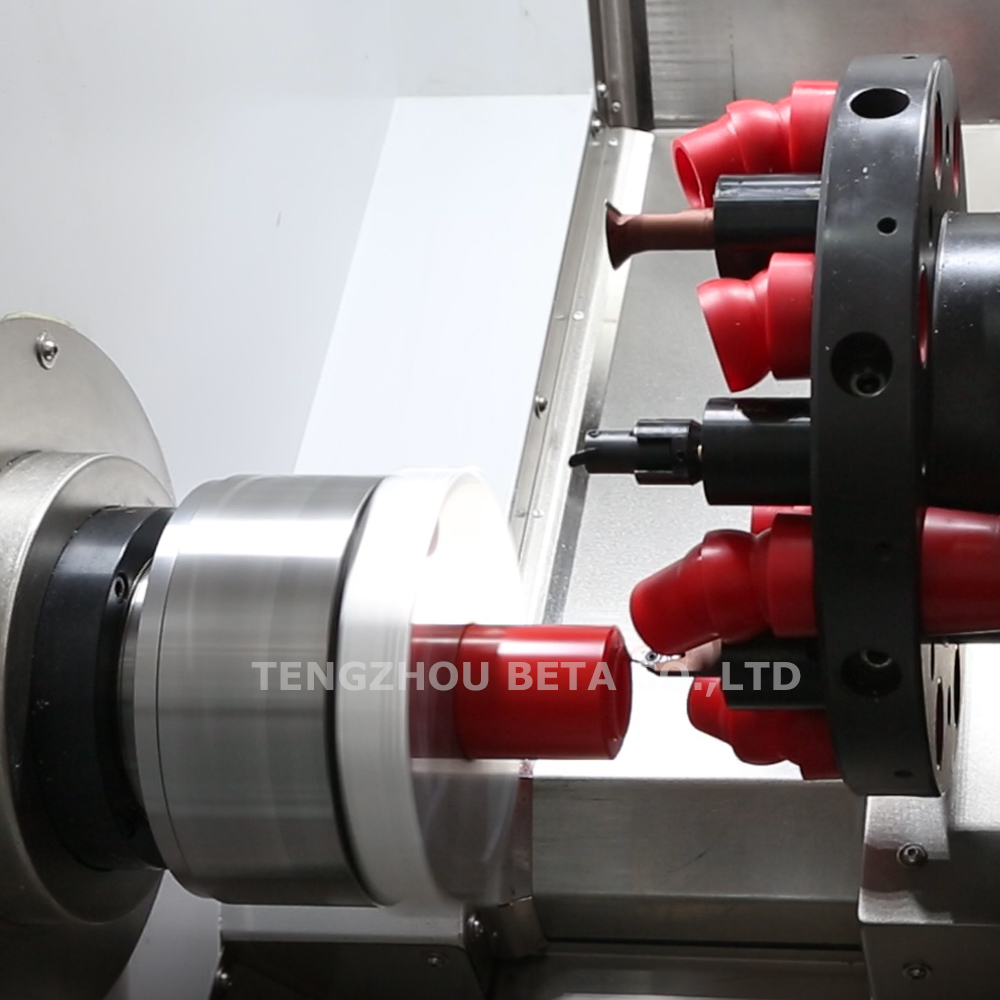
Modern manufacturing transcends traditional injection molding limits. CNC seal making technology allows manufacturers to produce exact-diameter parts on demand. This digital approach bypasses frustrating supply chain delays for rare or obsolete sizes. A CNC lathe turns raw polymer billets into finished, high-precision profiles in minutes. You get exact fits without paying for expensive custom molds.
Standard Off-the-Shelf vs. Custom Engineered Seals
Engineering teams face a constant choice between catalog kits and engineered solutions. We provide a decision matrix to help you determine the most effective path for your specific application.
Decision Matrix: When to Standardize
Catalog kits provide excellent results under specific, controlled conditions. You should standardise when your equipment meets the following criteria:
Standardized OEM Equipment: The machinery features untouched, factory-original cylinder grooves compliant with standard ISO dimensions.
Low-to-Moderate Pressure: The application runs within normal fluid power limits without extreme pressure spikes.
Predictable Environments: Temperature fluctuations remain minimal, and the environment lacks harsh chemical exposure.
Standard Media: The system utilizes conventional mineral-based hydraulic oils.
Decision Matrix: When to Customize
Standard kits fail rapidly outside optimal parameters. You must identify the triggers requiring a specialized approach. Customize your solutions under these circumstances:
Frequent Replacement Cycles: If catalog parts fail repeatedly in the same cylinder, you need a customized profile or stronger compound.
Obsolete OEM Equipment: Older machinery often features discontinued groove dimensions.
Extreme Temperature Fluctuations: Applications in steel mills or arctic environments demand custom material formulations.
Proprietary Cylinder Designs: Custom equipment builders often use non-standard hardware requiring bespoke sealing solutions.
Prototyping offers immense value before you commit to high-volume production. Rapid manufacturing allows engineers to test a single custom profile in the actual working cylinder. You validate the fit, friction levels, and pressure retention in real-world conditions. This iterative process ensures the final design performs flawlessly.
Strategic Material Selection for Demanding Environments
Material science forms the foundation of fluid power reliability. A perfectly machined profile fails instantly if the compound reacts poorly to the system fluid. We evaluate materials based strictly on their physical and chemical limitations.
Hydraulic Seal Material Comparison
Material Compound
Primary Strengths
Key Limitations
Typical Applications
Polyurethane (PU)
Exceptional abrasion resistance, high tensile strength.
Vulnerable to high temperatures and hot water exposure.
Standard heavy-duty hydraulics, earthmoving equipment.
PTFE (Teflon)
Extremely low friction, handles nearly all chemicals.
Lacks natural elasticity; requires an O-ring energizer.
Polyurethane provides incredible toughness for most standard applications. It handles rougher surfaces better than elastomers. However, you must avoid PU if system temperatures exceed 100°C constantly. PTFE offers virtually frictionless movement, eradicating stick-slip entirely. Yet, because it lacks memory, you must always pair it with an elastomeric energizer. Nitrile serves as an excellent baseline for standard oils. When moving to fire-resistant synthetic fluids or elevated temperatures, you must upgrade to Fluorocarbon (FKM).
Compliance and Certification
Industrial sectors impose strict regulatory requirements on material usage. Food processing plants demand FDA-compliant compounds to prevent product contamination. Water treatment facilities require NSF certifications. We strongly advise verifying material traceability reports before installing any component in a regulated environment. An incorrect material choice invites severe regulatory penalties and safety hazards.
Vetting and Shortlisting Your Manufacturing Partner
The capabilities of your supply partner directly influence your equipment uptime. You must look beyond simple spec sheets to evaluate their actual manufacturing infrastructure.
Evaluation Criteria for Vendors
Assess potential partners systematically. Their production capabilities define their agility. Do they rely solely on traditional injection molding, or do they offer advanced CNC turning? Molding works for mass production but fails when you need immediate custom diameters. Quality assurance separates reliable vendors from inconsistent ones. Look for ISO 9001 certifications. Demand batch traceability to ensure material lots remain verifiable.
Engineering support acts as the most critical differentiator. A competent vendor does more than fulfill orders. They analyze failures. Can they assist in redesigning a profile to solve a persistent hardware issue? For example, adding specialized backup rings prevents extrusion in systems experiencing severe pressure spikes. Partnering with a highly capable Diameter Hydraulic Seal Maker guarantees you receive technical guidance, not just a shipped box.
Next-Step Actions
Initiating a technical consultation requires preparation. We recommend gathering specific data before reaching out. Provide your vendor with accurate cylinder schematics and precise hardware measurements. Submit failed samples for professional analysis; observing wear patterns reveals underlying system flaws. Finally, request a pilot run. Test a small batch of custom-engineered parts to validate performance before upgrading your entire fleet.
Conclusion
Transitioning from reactive maintenance to proactive engineering changes how your facility operates. Buying generic catalog kits often leads to repeated failures and frustrating downtime. True reliability requires selecting precise materials and machining custom profiles tailored to your exact environment. Successful hydraulic repair demands rigorous attention to both hardware dimensions and the P-T-V-M operating conditions. Do not let minor tolerance deviations compromise your heavy machinery.
We urge procurement and engineering teams to stop guessing. Submit your specific cylinder dimensions and operating parameters today. Request a comprehensive technical review or a custom manufacturing quote to secure your system reliability.
FAQ
Q: How do I determine the correct dimensions for a custom hydraulic seal?
A: Always measure the metal hardware directly using calibrated micrometers or digital calipers. Record the rod diameter, bore diameter, groove width, and groove base diameter. Never measure a worn or extracted polymer part, as it will be swollen, stretched, or permanently deformed by system pressure.
Q: What is the typical lead time for a custom diameter hydraulic seal?
A: Advanced CNC machining significantly reduces lead times compared to traditional injection molding. While molded parts take weeks for tooling, CNC turning produces custom-diameter profiles in minutes or hours. You can often receive customized, exact-fit components within just a few days.
Q: Can I mix and match materials within a single hydraulic seal kit?
A: Yes, mixing materials is highly recommended. Different components serve different functions. For example, you might use a tough Polyurethane for the primary pressure barrier, while selecting an aggressive metal-cased NBR compound for the external wiper to block severe environmental contamination.
Q: Why is my standard off-the-shelf seal failing prematurely?
A: Premature failure typically results from a misalignment in the P-T-V-M framework. You might be exceeding the material's temperature limit or pressure rating. Alternatively, significant hardware wear enlarges the groove gaps, requiring an oversized custom profile to prevent extrusion.
TENGZHOU BETA CO.,LTD is located in Tengzhou City, Shandong Province. Our company is a professional manufacturer and exporter of machine tool equipments and accessories.