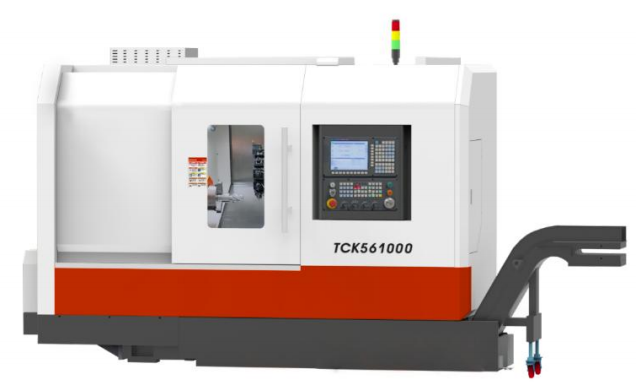
Choosing the right turning center dictates your machine shop's daily output, part precision, and ultimate bottom line. As manufacturing tolerances grow tighter, legacy flat-bed equipment often struggles to keep pace with aggressive production schedules. Engineers solved this fundamental bottleneck by tilting the machine base. This angled architecture specifically addresses the chip pooling and structural limitations that plague older designs, unlocking entirely new levels of manufacturing efficiency.
Once a facility decides to upgrade to this modern geometry, the next critical hurdle is selecting the correct incline. Manufacturers typically build these cast-iron foundations in 30-degree, 45-degree, or 60-degree configurations. Each specific angle serves a distinct mechanical purpose. The incline heavily influences everything from gravitational chip management to dynamic cutting rigidity. This guide breaks down the exact engineering differences between these three popular angles. We will compare them directly to legacy equipment and provide the technical insights you need to make a highly informed purchasing decision tailored to your shop floor.
Key Takeaways
Engineering Superiority: Angled designs offer superior chip evacuation, enhanced operator ergonomics, and higher structural rigidity compared to traditional flat models.
30° Configurations: Highly compact and cost-effective. These models are the ideal solution for lighter machining tasks, softer materials, and facilities with restricted floor space.
45° Configurations: Representing the industry standard, the 45-degree angle provides the optimal balance of dynamic rigidity, gravitational waste flow, and operator accessibility for general-purpose machining.
60° Configurations: Engineered as heavy-duty powerhouses. These steep beds are designed for massive turning diameters, aggressive material removal rates, and maximum thermal stability in demanding industrial applications.
Strategic Selection: Choosing the correct turning center relies entirely on matching the base angle to your specific turning length requirements, turret speed, and daily production volume.
Industry Shift: The Drive Toward Unattended Machining
Recent manufacturing sector data highlights a massive shift toward automated, high-mix, low-volume production. Machine shops face ongoing skilled labor shortages, driving an intense reliance on automated bar feeders and robotic unloaders. You simply cannot run a lights-out, unattended machining cell if an operator has to manually rake hot chips out of the cutting zone every hour. This industry-wide push for automation makes gravitational chip flow absolutely mandatory. Consequently, the angled machine base has evolved from a premium feature into a baseline requirement for any facility looking to remain competitive and scale its operations.
What is a Slant Bed CNC Lathe?
The Mechanical Evolution
To truly understand the mechanics of modern turning centers, we need to look at the historical context of lathe design. For decades, manual lathes utilized a horizontal foundation parallel to the shop floor. This was highly effective for manual operations where machinists needed to stand directly over the spinning chuck. However, the advent of Computer Numerical Control, known as CNC, fundamentally changed the machining paradigm. Modern automated machining demands exponentially higher spindle speeds, aggressive feed rates, and continuous operation.
Engineers quickly realized that flat bases possessed a critical mechanical flaw under these extreme conditions. Metal chips and scorching cutting fluids pooled directly on top of the precision guideways. Imagine an operator constantly battling a mountain of abrasive swarf. This harsh reality caused premature wear on expensive linear guides and ball screws. To combat this, machine builders began tilting the heavy cast-iron foundation. This simple but brilliant innovation fundamentally changed how cutting forces and waste materials are managed in high-production environments.
Core Engineering Advantages
Thermal Stability: Heat destroys precision. It really is that simple. During aggressive turning operations, metal chips can reach temperatures exceeding 600 degrees Celsius. In a horizontal setup, these scorching chips rest on the casting. They transfer thermal energy straight into the machine base, causing microscopic dimensional shifts. In contrast, the angled design ensures that hot chips and coolant slide immediately into the conveyor below. By preventing heat buildup, the machine maintains exceptional thermal stability and tight dimensional tolerances over long production shifts.
Operator Ergonomics: Despite heavy automation, machinists still frequently interact with the equipment. Picture an operator loading a heavy steel billet. On a traditional layout, they must lean awkwardly over the machine apron, straining their lower back. Conversely, the tilted configuration brings the spindle and turret directly toward the front door. This transforms a strenuous physical task into a smooth, ergonomic motion for rapid tool changes and part inspections.
Optimized Footprint: Industrial floor space is a premium asset. By stacking the X and Z axes on an incline, the machine maintains a massive machining envelope while occupying a significantly smaller physical footprint. For instance, investing in a modern Slant Bed CNC Lathe effectively maximizes your shop floor utilization. You can easily accommodate long shaft workpieces without the machine dominating your entire facility layout.
Why the Bed Angle Matters in a CNC Lathe Machine
Gravity and Chip Evacuation
The fundamental physics of this machine design rely heavily on gravity. In high-volume production, efficient waste management is critical to success. The specific angle directly dictates how fast byproducts leave the work area. Different raw materials produce vastly different types of chips. Machining low-carbon steel, for example, often generates long, stringy, and heavy chips. If the incline is too shallow, these chips will rapidly accumulate around the chuck and cutting tools.
Poor chip evacuation is a critical failure point. It leads to the recutting of hardened chips, which instantly destroys surface finishes and shatters expensive carbide tooling. Furthermore, accumulated debris can cause catastrophic machine crashes if it wraps around the rotating spindle. The steeper the angle, the faster gravity assists the high-pressure coolant in flushing away hazardous debris.
Cutting Force Distribution and Rigidity
Beyond waste management, the incline plays a paramount role in the machine's structural rigidity. During a heavy roughing pass, the cutting tool applies immense pressure against the workpiece. This generates powerful tangential, radial, and axial force vectors. The angled geometry aligns the machine's guideways perpendicular to these intense cutting forces.
Instead of the cutting pressure pushing the turret away from the workpiece, the tilted design directs the force downward. The energy is absorbed directly into the widest and thickest part of the cast-iron base. This precise alignment drastically dampens vibration, which machinists commonly refer to as chatter. Less vibration translates directly to superior surface finishes, tighter dimensional tolerances, and a significantly increased lifespan for the machine's mechanical drive systems.
Core Comparison Table
Bed Angle
Shop Footprint
Chip Evacuation
Dynamic Rigidity
Ideal Application
30°
Highly Compact
Moderate
Good
Light-duty turning, aluminum, plastics, small job shops
45°
Balanced
Excellent
Very High
General manufacturing, mixed tough metals, automated cells
60°
Vertical / Large
Maximum
Extreme
Heavy hogging, large diameter aerospace and oil & gas alloys
30° Configurations: The Compact Workhorse
Best Applications for 30-Degree Incline
The 30-degree configuration is widely considered the entry point into modern turning technology. Because the incline is relatively shallow, the machine's overall height and depth are kept to an absolute minimum. This makes it the perfect solution for smaller job shops operating in confined spaces with strict footprint limitations.
From a practical machining perspective, this angle excels in high-speed, light-duty turning applications. It is highly favored for processing softer materials such as aluminum, brass, copper, and industrial plastics. Because these materials produce lightweight flakes that do not require aggressive gravitational assistance to clear the cutting zone, the shallow incline, paired with standard coolant flow, is more than sufficient.
Pros and Cons
Like any specialized engineering design, the shallow base comes with distinct advantages and inherent limitations that production managers must carefully evaluate.
The primary advantage is cost and size. These machines typically require less cast iron and a less complex base structure, resulting in a lower upfront capital cost. Their highly compact profile fits perfectly into crowded facilities. Additionally, the shallow angle provides a visual perspective closer to a traditional horizontal lathe, offering an easier operational transition for veteran manual machinists.
Conversely, chip evacuation is noticeably less effective compared to steeper angles. Heavy steel or cast-iron chips may not slide down a shallow incline easily, sometimes requiring manual intervention from the operator. Furthermore, the 30-degree angle does not distribute massive cutting forces into the base as effectively, making it less suitable for aggressive, interrupted cuts on tough alloy steels.
45° Configurations: The Industry Standard
Why 45 Degrees is the Engineering Sweet Spot
If you walk into any modern manufacturing facility today, the vast majority of the turning centers you encounter will feature a 45-degree base. In mechanical engineering circles, this angle is widely regarded as the ultimate sweet spot. Mathematically, it provides an equal distribution of mass and force across the horizontal and vertical planes. It perfectly balances gravitational waste flow with absolute structural rigidity.
In the context of modern automated cells, the 45-degree layout has solidified its position as the market favorite. Its specific geometry provides the necessary spatial clearance for automated bar feeders and robotic unloaders without sacrificing the core rigidity required for diverse material handling. It handles the demands of high-mix production flawlessly.
Ideal Machining Scenarios
The versatility of the 45-degree configuration makes it the ultimate general-purpose machine. It serves as the backbone of job shops that handle a wide variety of materials, ranging from low-carbon steel and stainless steel to exotic aerospace alloys. When investing in a high-quality 1000mm turning length servo turret slant bed CNC lathe with a 45-degree configuration, shops gain a highly adaptable platform. It places the spindle at an optimal ergonomic distance while ensuring that almost all types of chips fall naturally into the conveyor. This guarantees reliable, continuous, and profitable production.
60° Configurations: The Heavy-Duty Powerhouse
Handling Large Diameters and Heavy Chips
When machining operations scale up in physical size and material hardness, the demands placed on the machine tool change drastically. The 60-degree base is engineered specifically for these extreme environments. With an incline that is nearly vertical, this design takes maximum advantage of gravity.
In heavy-duty turning, massive volumes of thick, heavy chips are generated in seconds. On a shallower base, these chips could pile up, causing severe thermal distortion or mechanical jamming. However, on a steep 60-degree drop, heavy steel, cast-iron, or titanium chips fall straight down into the conveyor system instantly. Specifically, this steep angle positions the X-axis cross-slide almost directly above the spindle. This vertical alignment means that the immense downward cutting forces generated during large-diameter turning are absorbed directly by the machine's foundation, providing unparalleled stability.
When to Upgrade to a 60-Degree Machine
This is a highly specialized asset. While not typically necessary for standard job shop work, it becomes absolutely essential in heavy industries such as aerospace, oil and gas, and heavy automotive manufacturing. Facilities should consider upgrading to this steep incline when their daily operations involve continuous, aggressive material removal on hard alloys like Inconel, Hastelloy, or hardened tool steels. The near-vertical drop ensures that chips spend zero time resting on internal components, guaranteeing the highest level of thermal stability required for strict energy-sector tolerances.
Angled vs. Flat Foundations: Which is Right for Your Shop?
Precision and Thermal Stability Comparison
The ongoing debate between angled and horizontal lathes ultimately boils down to precision longevity and thermal dynamics. Horizontal lathes feature exposed guideways that run flat. During operation, chips and coolant inevitably pool on these rails. This transfers thermal energy into the machine base and causes thermal displacement. Even a shift of a few microns can result in scrapped parts and lost revenue.
In stark contrast, the tilted design operates as a fully enclosed, thermally stable ecosystem. Because gravity constantly pulls waste away from the guideways, heat transfer is severely minimized. Modern angled bases utilize precision linear guideways protected by heavy-duty telescopic covers. This ensures that the mechanical components remain completely insulated from the harsh cutting environment, preserving micron-level precision over the machine's entire lifecycle.
Cost vs. Long-Term Return on Investment
When evaluating capital equipment, upfront cost is always a primary consideration. It is an objective fact that horizontal lathes are generally cheaper to manufacture and purchase. For a hobbyist or a maintenance shop doing low-precision repair work, a horizontal model might seem appealing.
However, industrial purchasing decisions must be based on long-term Return on Investment, or ROI. High-precision Slant Bed CNC Lathes offer a significantly higher ROI over time. By drastically reducing the time operators spend manually clearing chips, extending the lifespan of expensive carbide inserts, and minimizing downtime caused by thermal inaccuracies, the modern machine quickly offsets its higher initial price tag. For any facility aiming for automated, high-precision production, the angled architecture is the only financially sound choice.
How to Choose the Right Machine for Your Needs
Step 1: Assess Turning Length and Capacity
Selecting the correct machine specifications requires a realistic analysis of your typical workpiece dimensions. Do not buy a machine that barely fits your current parts; plan for future capabilities. For instance, selecting a 1000mm Turning Length Servo Turret Slant Bed CNC Lathe provides exceptional versatility for machining long drive shafts, hydraulic cylinders, and complex drivetrain components. This extended 1000mm length ensures the machine easily handles both short pucks and extended workpieces without requiring multiple, time-consuming setups.
Step 2: Evaluate Turret Speed and Reliability
Tool change speed directly impacts your cycle times. Integrating a modern servo turret facilitates lightning-fast tool indexing. Unlike traditional hydraulic turrets that suffer from fluid leaks, thermal expansion, and pressure drops, servo-driven mechanisms index rapidly and lock into place with absolute precision. This advanced technology shaves valuable seconds off non-cutting cycle times, directly boosting your overall throughput and shop profitability.
Step 3: Controller Stability and Processing Power
The brain of any turning center is its controller. A reliable system dictates programming efficiency, block processing speed, and operational stability. Choosing a machine equipped with a robust GSK CNC Controller ensures that your operators face a minimal learning curve. These industrial-grade controllers streamline complex G-code programming and guarantee that replacement parts and technical support remain readily available, keeping your spindle turning and making chips.
Conclusion
Navigating the complexities of CNC machinery investment requires a clear, engineering-based understanding of your shop's unique demands. To summarize the engineering facts: the 45-degree angle remains the safest, most versatile bet for general manufacturing use, offering an unbeatable blend of rigidity and ergonomics. The 30-degree angle is perfect for space-saving, high-speed light work on softer metals. Meanwhile, the steep 60-degree angle stands as the ultimate solution for heavy-duty hogging and large-diameter turning in extreme industrial environments.
We highly encourage you to carefully evaluate your specific part lengths, material hardness, and automation goals before making a final decision. Explore our advanced 1000mm GSK controller models today to see exactly how modern angled base technology can elevate your production capabilities. Contact our expert engineering team at BetaCNC for a detailed, customized machining consultation tailored to your exact shop floor needs.
FAQ
Is an angled lathe harder to maintain than a flat model?
No. In fact, because chips and coolant naturally fall away from the precision guideways and ball screws, these machines often require significantly less daily maintenance. The fully enclosed design protects critical linear motion components from abrasive metal dust and cutting fluids, meaning the machine suffers far less mechanical wear and tear over its operational lifespan.
Can I use standard tooling on 30°, 45°, and 60° machines?
Yes, standard cutting tools, such as carbide inserts, drills, and boring bars, remain exactly the same across different bed angles. However, the turret configuration and specific tool holder blocks must match the machine's specifications. A high-speed servo turret requires specific mounting hardware that aligns perfectly with the machine's center height.
Why are 45-degree configurations the most popular choice?
They offer the perfect mathematical and structural balance for modern manufacturing. The 45-degree angle provides excellent gravitational waste evacuation while keeping the spindle close enough to the front doors for comfortable operator access. It delivers high dynamic rigidity for tough materials without making the machine overly bulky.
What is the benefit of a Servo Turret over a hydraulic one?
A servo turret utilizes a dedicated electric servo motor for indexing, making tool changes incredibly fast and highly precise. Compared to traditional hydraulic systems, servo turrets completely eliminate fluid leaks, oil temperature variations, and pressure drops. This modern technology significantly reduces cycle times and improves positional repeatability.
Does the CNC controller brand actually matter?
Yes, the controller brand matters significantly. The controller dictates the programming interface, processing speed, and overall reliability of the machine tool. Choosing a well-supported, industrial-grade system, such as a GSK CNC Controller, ensures smoother operations, easier troubleshooting, and better availability of spare parts.
How does the bed angle directly affect cutting tool life?
The angle affects tool life primarily through heat and vibration control. A steeper angle directs cutting forces downward into the heaviest part of the casting, reducing chatter. Less vibration prevents the micro-chipping of carbide inserts. Additionally, because hot chips fall away instantly, the tool does not recut hardened debris, significantly extending the life of the cutting edge.
What is the maximum turning length typically handled by these machines?
While compact models might only handle 300mm to 500mm, industrial-grade machines are specifically built for larger work. A standard heavy-duty configuration frequently features a 1000mm turning length, allowing shops to machine long drive shafts, axles, and hydraulic cylinders in a single setup without needing a specialized, oversized machine tool.
TENGZHOU BETA CO.,LTD is located in Tengzhou City, Shandong Province. Our company is a professional manufacturer and exporter of machine tool equipments and accessories.