Machine shop owners and manufacturing engineers frequently face a critical dilemma when expanding their production capabilities. You have to decide between horizontal and vertical turning setups. Making the wrong choice leads to workflow bottlenecks. It causes excessive tooling wear and wastes valuable floor space. You might find yourself staring at a complex blueprint right now, wondering which machine orientation will yield the tightest tolerances without ruining your cycle times.
The lathe serves as the undisputed backbone of modern metalworking. Both vertical and horizontal configurations perform the exact same fundamental task. They spin a secured workpiece against a stationary cutting tool to shear away metal. However, their physical orientation drastically changes how they interact with different part geometries. The direction of the spindle affects everything from gravitational forces on the raw material to the fluid dynamics of chip evacuation.
To help you navigate this significant capital investment, this guide provides a comprehensive breakdown of the mechanical differences. We will look at operational advantages and ideal use cases for vertical versus horizontal machines. By evaluating these specific engineering variables, facility managers can make an informed purchasing decision that perfectly aligns with their factory floor requirements.
Key Takeaways
Spindle Orientation: Horizontal lathes feature a spindle that runs parallel to the shop floor. Vertical lathes utilize a spindle pointing straight upward, allowing the chuck to sit flat like a turntable.
Gravity Dynamics: Vertical setups harness gravity to their advantage to stabilize heavy, large-diameter parts. Conversely, horizontal machines face physical challenges with gravitational deflection on exceptionally heavy or long workpieces.
Chip Evacuation: Horizontal layouts naturally allow hot metal chips to fall safely away from the cutting zone. Vertical machines require aggressive high-pressure coolant management to prevent chip recutting.
Shop Footprint: Vertical turning centers generally take up significantly less horizontal floor space compared to a long-bed setup. They build upward rather than outward.
Best Use Cases: Horizontal machines excel at machining long, cylindrical parts such as drive shafts and tubes. Vertical setups are specifically engineered for heavy, short, and wide parts like brake rotors and aerospace rings.
Understanding the Basics of a CNC Lathe Machine
Before diving into the nuances of spindle orientation, we must establish a baseline of how a turning center actually operates. Computer Numerical Control automates the turning process. Instead of a machinist manually cranking handwheels, programmed G-code dictates the exact movement of the cutting tools. This achieves high precision, strict tolerances, and exact repeatability across large production runs.
The core function of any lathe is subtractive manufacturing. A block of raw material is securely clamped in a chuck. The machine rotates this material at high speeds, often reaching thousands of revolutions per minute. As the workpiece spins, a stationary cutting tool smoothly feeds into the surface. It peels away ribbons of metal to shape the final cylindrical profile, cut threads, or bore internal diameters.
Historically, the machining industry relied entirely on manual operation. As production demands grew more complex, engineers realized that a single machine geometry could not efficiently handle every type of part. This physical limitation led to the development of the two primary configurations we rely on today.
What is a Horizontal CNC Lathe Machine?
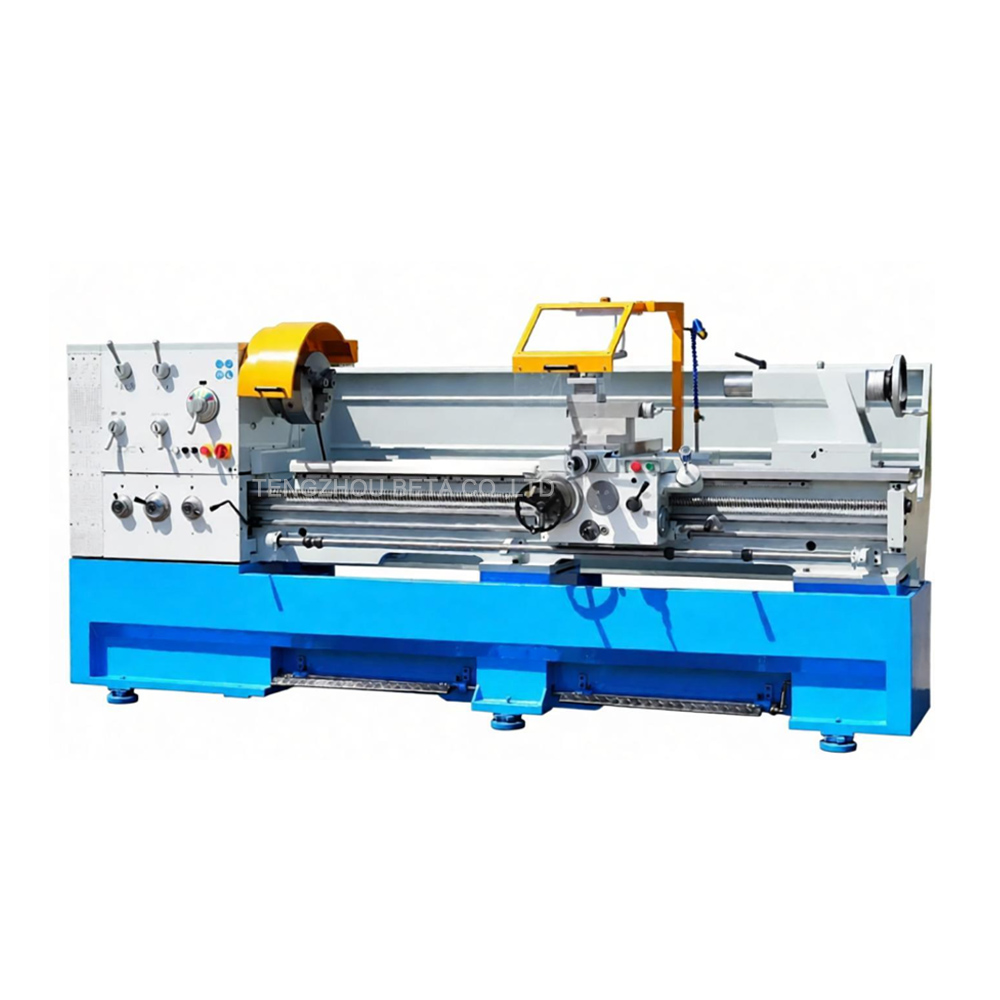
The horizontal configuration is the traditional and most widely recognized setup in the machining industry. In this design, the spindle is mounted horizontally. The workpiece is clamped in the chuck and extends outward, running completely parallel to the ground.
These machines serve as the conventional baseline for turning operations. For decades, the conventional horizontal lathe has set the global standard for metalworking. Many modern shops continue to utilize a mix of advanced automated equipment alongside these foundational designs for custom work, quick tooling adjustments, and low-volume repairs. For example, a standard gap bed metal turning lathe like the C6266 series is engineered to handle a maximum workpiece length of up to 2000mm. This makes it incredibly versatile for standard shaft work.
From a mechanical standpoint, horizontal setups are heavily optimized for length. Because the part extends outward into open space, long workpieces must be supported at the opposite end by a tailstock. Sometimes they are stabilized in the middle by steady rests. This support infrastructure is absolutely critical. Without it, the aggressive cutting forces combined with the weight of the material would cause the part to vibrate. The metal would bend away from the tool, instantly ruining the dimensional accuracy of your cut.
What is a Vertical CNC Lathe Machine?
A vertical lathe takes the traditional orientation and flips it exactly 90 degrees. In this configuration, the spindle sits upright. The chuck faces directly upward toward the shop ceiling.
The easiest way to conceptualize this setup is to imagine a potter's wheel. Instead of wrestling a heavy piece of metal sideways into a chuck, the operator simply lowers the workpiece down onto the flat clamping surface. The cutting tools then approach the spinning part from the top or sides via a rigid vertical ram.
This specific design was not born out of a desire to save space. It was created to solve a distinct mechanical problem. Engineers needed a way to handle massive, heavy, and unusually shaped components. Picture trying to machine a five-ton cast iron pump housing. Mounting such a behemoth horizontally is exceptionally difficult and highly dangerous. You need immense clamping force to hold it against gravity. Vertical machines were specifically engineered to eliminate this physical limitation. They offer a stable, gravity-assisted platform for heavy-duty turning.
Core Differences: Vertical vs. Horizontal Lathe Configurations
Understanding the mechanical and operational differences between these two configurations is vital for matching the machine to your specific manufacturing application. We have compiled a core comparison table to highlight the primary engineering variables.
Engineering Feature
Horizontal Lathe
Vertical Lathe
Spindle Orientation
Parallel to the shop floor
Perpendicular to the shop floor
Ideal Part Geometry
Long, cylindrical shafts and tubes
Heavy, short, large-diameter rings and disks
Impact of Gravity
Causes unsupported long parts to sag
Stabilizes heavy parts securely into the chuck
Chip Evacuation
Excellent. Chips fall away naturally.
Poor. Requires high-pressure coolant flushing.
Floor Footprint
Long and rectangular
Compact and square
Spindle Orientation and the Impact of Gravity
Gravity is a relentless force on the shop floor. In a horizontal setup, gravity constantly pulls down on the unsupported side of the part. For standard lightweight parts, this pull is negligible. However, for very heavy or exceptionally long pieces, this gravitational force causes runout. Even a microscopic deflection forces the chuck to work harder to maintain a secure grip. This severely compromises part roundness.
In contrast, a vertical setup transforms gravity from an enemy into an ally. Gravity pushes the massive part straight down into the chuck. This naturally seats the workpiece securely against the locating surfaces. It stabilizes heavy loads and significantly reduces the amount of jaw clamping force required to hold the part safely during aggressive roughing passes.
Floor Space and Shop Footprint
Manufacturing floor space is a premium asset that directly impacts operational overhead. A horizontal machine naturally requires a long footprint to accommodate the spindle, the bed, the tailstock, and the tool turret. If you are running a 2000mm bed length, that machine will consume a massive amount of linear space.
Furthermore, vertical machines are designed to build upward rather than outward. Because the primary cutting axis moves vertically, the machine footprint is dictated by the diameter of the chuck rather than the length of the bed. This compact footprint is highly advantageous for facility managers looking to maximize their operational density.
Chip Evacuation and Coolant Flow
Aggressive machining generates a tremendous volume of scorching hot metal chips. In a horizontal layout, gravity easily pulls these chips away from the cutting zone. They fall straight down into the chip conveyor. This makes chip evacuation highly efficient. It prevents heat from soaking into the part and keeps the cutting tool path clear.
Chip management in a vertical machine presents a known engineering challenge. Because the part is oriented like a bowl, chips naturally tend to pool inside the hollow areas of the workpiece. To combat this accumulation, vertical setups require high-pressure coolant systems to forcefully flush the chips out.
Advantages and Disadvantages of Horizontal Lathes
Advantages of a Horizontal Setup
Superior chip evacuation: The natural downward fall of metal shavings ensures a cleaner cutting environment. This prolongs tool life and guarantees excellent surface finishes.
Ideal for long parts: The integration of tailstocks makes horizontal turning the only viable choice for machining long shafts and cylinders. A gap bed metal turning lathe handles extended lengths with unmatched precision.
Seamless automation: They pair flawlessly with bar feeders for high-volume automated manufacturing runs.
Workforce familiarity: The horizontal layout is the historical industry standard. There is a much wider availability of operators who are intimately familiar with this setup.
Disadvantages of a Horizontal Setup
Large floor footprint: The long bed design consumes highly valuable linear floor space.
Loading challenges for heavy parts: It is physically demanding and potentially hazardous to manually load a very heavy part into a horizontal chuck. Operators must fight gravity to hold the part perfectly straight while tightening the jaws.
Advantages and Disadvantages of Vertical Lathes
Advantages of a Vertical Setup
Perfect for heavy components: They are unmatched when processing heavy, large-diameter parts that would otherwise destabilize a horizontal spindle.
Gravity-assisted clamping: Because gravity naturally seats the part into the chuck, operators can use less clamping force. This prevents thin-walled parts from distorting under heavy jaw pressure.
Compact footprint: The vertical design saves critical shop floor space.
Ergonomic loading: It is significantly easier and safer to load heavy parts using an overhead crane. You simply drop the component into place.
Disadvantages of a Vertical Setup
Poor natural chip evacuation: The tendency for chips to pool requires constant monitoring and robust coolant management to prevent tool breakage.
Unsuitable for long parts: Vertical machines generally lack the horizontal clearance and tailstock support necessary to accurately machine long workpieces.
Higher upfront costs: Due to the massive cast iron frames required to support vertical loads, these machines generally carry a higher initial purchase price.
Industry Applications: Making the Right Selection
Making the right purchasing decision requires a careful analysis of your specific production needs. Do not just look at the sticker price. Look at the engineering realities of your blueprints.
The golden rule of lathe selection revolves around the Length-to-Diameter ratio. If the parts you manufacture are long and thin, a horizontal machine is mandatory. For instance, if you are turning pump shafts, axles, or drill pipes, you need the linear support of a 2000mm conventional horizontal lathe. Horizontal machines are the undisputed workhorses of general-purpose machine shops and automotive fastener production.
Specifically, if your parts are short, wide, and exceptionally heavy, a vertical machine will provide superior stability. Vertical turning centers are the backbone of heavy industries. They are indispensable in the aerospace sector for machining jet engine rings. The energy sector utilizes massive vertical machines to produce wind turbine components and valve bodies. When parts become too large for a single operator to lift safely, the vertical setup becomes an absolute necessity.
Navigating Industry Trends in CNC Turning
The manufacturing landscape is continuously evolving. Recent market analyses highlight a significant shift in how machine shops approach turning operations. Driven by rising industrial real estate costs, there is a distinct trend toward maximizing floor space. Many facilities are increasingly adopting compact vertical turning centers even for medium-sized parts. They leverage the smaller footprint to create high-density machining cells.
Simultaneously, the explosive growth of the Electric Vehicle sector is reshaping horizontal turning. Electric vehicle manufacturing demands millions of highly precise, relatively long motor shafts. To meet this demand, the industry is moving away from standalone manual machines for mass production. Factories are heavily investing in fully integrated horizontal turning cells equipped with overhead gantry loaders. Despite these advancements in automation, the fundamental physics dictating horizontal versus vertical part holding remain completely unchanged.
Conclusion
The choice between a vertical and horizontal lathe ultimately boils down to the specific geometry, size, and weight of the parts you intend to manufacture. You must weigh these factors against the realities of your shop floor space. There is no universally superior machine. There is only the right machine for the job at hand.
A horizontal setup remains the most versatile, cost-effective choice for standard turning operations, exceptionally long parts, and high-speed bar-fed production. In contrast, a vertical machine is an indispensable powerhouse. It offers unmatched rigidity, ergonomic safety, and space-saving efficiency when tackling heavy, large-diameter components.
Assess your current production bottlenecks. Review your most challenging blueprints. If your shop handles long shaft work and requires dependable, rigid turning capabilities, explore the high-quality C6266 horizontal turning lathes at betacncmc.com to find the exact specifications that will drive your future profitability.
FAQ
Can a horizontal lathe machine do the same work as a vertical lathe?
Yes, up to a certain weight and diameter limit. A robust horizontal machine can certainly turn large flanges and disks. However, once a part becomes too heavy, the relentless pull of gravity causes it to sag in a horizontal chuck. This deflection severely compromises machining tolerances and operator safety. Exceptionally heavy parts require a vertical setup.
Which type of turning machine is more expensive?
Generally speaking, massive vertical turning centers carry a higher price tag than standard horizontal lathes. This cost difference is driven by the heavy-duty cast iron frames, specialized thrust bearings, and robust drivetrains required to safely support massive vertical weights.
Is a conventional horizontal setup still relevant today?
Absolutely. While advanced automated machines offer unparalleled repeatability for high-volume production, conventional manual or semi-automatic horizontal machines remain incredibly cost-effective. They are widely utilized across the globe for low-volume production runs, custom one-off repairs, and general maintenance shop work. Programming a complex automated machine often takes longer than simply machining a simple part manually.
How does chip removal work on a vertical lathe?
Because chips do not naturally fall away from the cutting zone due to gravity, vertical machines rely on highly engineered fluid solutions. They utilize high-pressure coolant systems to literally blast chips out of the cutting area. Additionally, they feature steeply angled internal sheet metal guards to direct debris downward into automated chip conveyors.
Do vertical lathes take up less space?
Yes, they do. Because the spindle, chuck, and primary cutting axis are oriented vertically, the machine builds upward. Its overall floor footprint is significantly smaller than a horizontal machine with an equivalent machining capacity. This allows manufacturing facilities to install more machines in a limited amount of square footage.
What is the maximum turning length typically handled by horizontal lathes?
The maximum length depends entirely on the specific machine bed. Standard horizontal machines easily handle lengths from 500mm up to 2000mm. Heavy-duty industrial models used in the oil and gas sector can turn pipes and shafts exceeding 6000mm in length, utilizing multiple steady rests for support.
Which machine configuration is better for automated mass production?
Horizontal machines are generally preferred for automated mass production of small to medium parts because they integrate seamlessly with continuous bar feeders. This allows for lights-out, unattended machining. Vertical machines are typically automated using robotic arms or gantry loaders, which is highly effective but involves loading discrete, individual castings rather than continuous bar stock.
TENGZHOU BETA CO.,LTD is located in Tengzhou City, Shandong Province. Our company is a professional manufacturer and exporter of machine tool equipments and accessories.