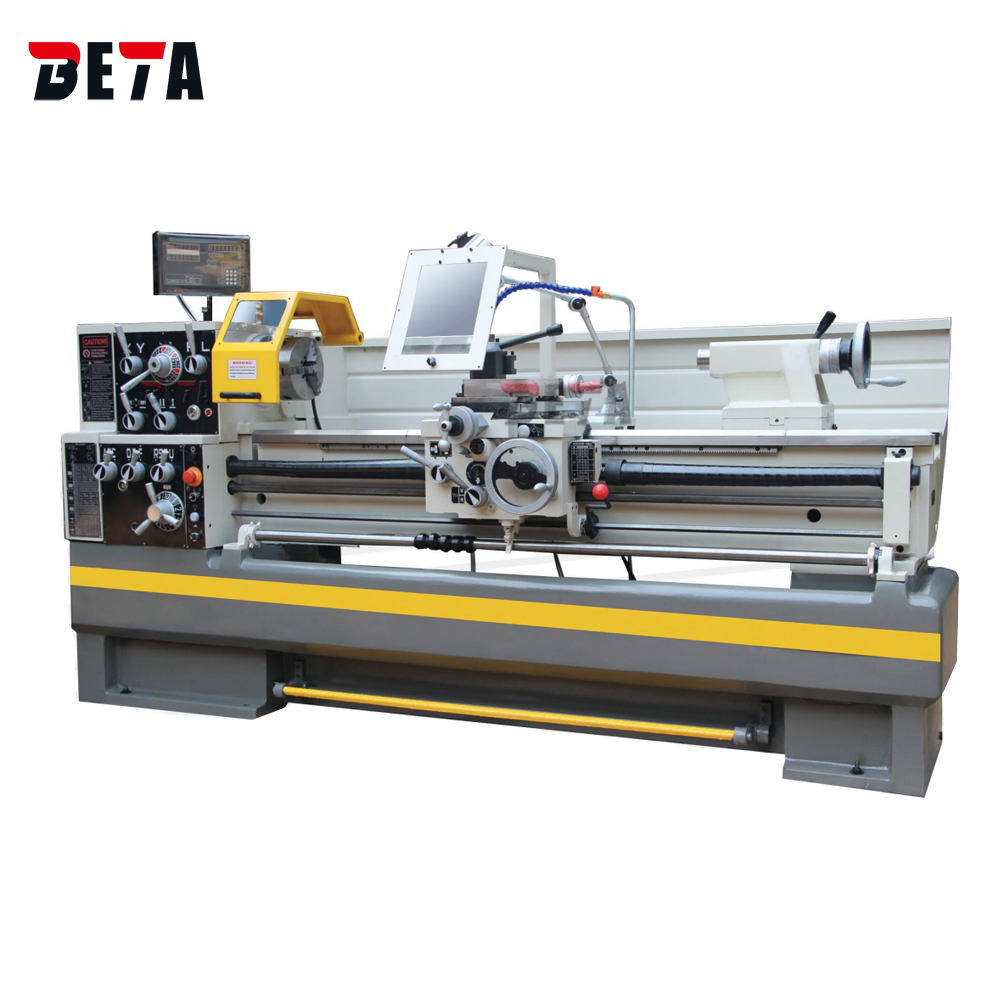
Walk into any heavy industrial repair facility today. You will hear the distinct, rhythmic hum of a manual lathe cutting through steel. Even as digital automation dominates manufacturing headlines, the foundational craftsmanship of manual machining holds a vital, irreplaceable place on the shop floor.
Shop owners and facility managers face a constant dilemma. Do you keep relying on traditional manual machines? Or is it time to finance a costly CNC upgrade? It is a tough call. In this comprehensive guide, we will explore the mechanical intricacies of conventional lathes. We will focus specifically on horizontal and centre lathes used for metal fabrication. Furthermore, we will help you objectively evaluate your production workflow. By the end, you will know exactly when transitioning to a CNC Lathe Machine becomes a profitable necessity rather than just a technological luxury.
Key Takeaways
Foundation of Turning: Conventional horizontal and centre lathes remain the undisputed backbone of manual metal turning. They are highly effective for custom prototyping, one-off repairs, and low-volume production.
Anatomy Matters: A practical understanding of core structural components is crucial. You must know your geared headstock, sliding tailstock, and heavy-duty cast-iron bed to operate safely.
Conventional vs. CNC: A manual machine offers unmatched affordability and direct, tactile control. In contrast, a CNC lathe provides the microscopic precision and high-volume repeatability required for scaling.
Buying Factors: Evaluating physical specifications ensures the equipment matches your needs. Pay close attention to the maximum distance between centres, swing over bed, and internal spindle bore size.
Maintenance is Key: Consistent daily lubrication and rigorous chip clearing are mandatory. Periodic alignment checks keep turning centers operating at peak geometric accuracy over decades of heavy use.
Industry Trends: The Rise of the Hybrid Shop Floor
Recent market analyses reveal an interesting shift in the metalworking sector. While CNC adoption is rapidly accelerating globally, the demand for conventional lathes has not collapsed. In fact, it is stabilizing. Why? Because smart manufacturers are adopting "hybrid" shop floors.
Industry data shows that tying up a highly expensive, multi-axis CNC turning center for a simple hydraulic rod repair destroys profitability. As a result, facility managers are retaining traditional manual machines to handle immediate, low-cost tooling modifications and emergency MRO (Maintenance, Repair, and Operations) work. This strategic separation keeps the automated lines completely free for lucrative, high-volume batch runs. It is no longer about manual versus CNC; it is about utilizing both platforms to maximize overall facility ROI.
What is a Conventional Horizontal Lathe?
A conventional horizontal lathe is a manually operated industrial machine tool. It is engineered primarily for shaping raw metal. Unlike fully automated systems, this equipment relies entirely on physical input. It demands the mechanical intuition and honed expertise of a machinist. The operator uses a series of precision-machined handwheels, gear levers, and dials. Through these, they manually dictate the cutting speed, feed rate, and the exact depth of the cut.
The Basics of Metal Turning
At its core, metal turning is a subtractive manufacturing process. It is governed by a simple, elegant physical principle. The raw metal workpiece rotates at a highly controlled speed. Meanwhile, a stationary, single-point cutting tool is steadily fed into its surface. As the hardened tool insert engages the spinning metal, it aggressively shears away excess material. You will see this as hot, curling chips falling into the pan. This gradual subtraction transforms rough bar stock into a perfectly concentric cylindrical profile.
This process is remarkably versatile. Machinists routinely turn everything from soft aluminum alloys to tough, work-hardening materials like 304 stainless steel and cast iron. The specific metallurgical properties of the workpiece dictate the required spindle speed (RPM). They also determine the geometry of the cutting tool needed to achieve a smooth, mirror-like surface finish.
Horizontal vs. Vertical Orientation
Turning machines are broadly categorized by the physical orientation of their main drive spindle. The horizontal orientation remains the undisputed industry standard for conventional turning tasks. In this traditional setup, the spindle holds the workpiece entirely parallel to the shop floor.
This specific configuration provides distinct mechanical advantages. First and foremost, gravity actively assists in continuous chip evacuation. As the cutting tool shears metal away, the heavy chips naturally fall downward. This keeps the critical cutting zone clear of abrasive debris. When evaluating a reliable Conventional Horizontal Lathe, you will notice this parallel spindle setup is structurally optimized for machining long, slender workpieces. Parts like automotive drive shafts or hydraulic cylinder rods require rigid support at both ends to prevent dangerous deflection.
Understanding Centre Lathes for Metalworking
Walk onto any veteran shop floor, and you will hear the term "engine lathe" used interchangeably with "centre lathe." It refers to a highly specific, robust class of horizontal turning machines. They are engineered to grip workpieces with extreme rigidity. This structural stiffness guarantees high concentricity and tight tolerances during aggressive roughing operations.
Why is it Called a "Centre" Lathe?
The traditional designation originates directly from the machine's primary method of workholding. To achieve maximum precision, the metal workpiece is suspended between two perfectly aligned, conical steel points known as centres. This is especially critical when turning long cylindrical parts that are prone to flexing.
Typically, a rotating "live centre" or a dog-driven "dead centre" is mounted directly into the headstock spindle. A corresponding stationary centre is locked into the tailstock quill at the opposite end. By clamping the metal tightly between these two true points, the machinist ensures the axis of rotation remains flawless. This specialized setup effectively eliminates the dangerous runout (wobble) that occurs when attempting to hold a long, heavy part using only a standard jawed chuck.
Key Applications in Metal Fabrication
Centre lathes are highly prized for their unparalleled versatility. A seasoned operator can execute a vast array of complex machining operations on a single piece of equipment. There is no need for extensive, time-consuming retooling. Key shop floor applications include:
Turning and Facing: Systematically reducing the outer diameter of a cylinder, or cutting a perfectly flat surface across the end face of the part.
Threading: Cutting precise internal or external screw threads by carefully engaging the machine's synchronized lead screw.
Tapering: Machining gradual conical shapes by offsetting the tailstock laterally or adjusting the angle of the compound rest.
Knurling: Forcing a hardened steel wheel against the spinning part to press a textured grip pattern into the metal.
Boring and Drilling: Utilizing tailstock-mounted drill chucks and heavy boring bars to enlarge or true up internal cavities.
Core Components of a Conventional Horizontal Lathe
To make a financially sound purchasing decision, buyers must possess a clear understanding of the machine's anatomy. The overall rigidity, vibration dampening capability, and cutting accuracy depend entirely on the manufacturing quality of these core structural components.
The Bed, Headstock, and Tailstock
The Bed: Serving as the foundational spine of the machine, the bed is typically cast from high-strength, heavily ribbed grey cast iron. It is intentionally designed to be incredibly massive. This sheer weight is essential. It absorbs and dissipates the intense, high-frequency vibrations generated during heavy metal cuts. The top surface features precision-ground "ways" that guide the longitudinal movement of the carriage with near-zero friction.
The Headstock: Permanently anchored at the left end of the bed, the headstock acts as the powerhouse. It safely encloses the main electric drive motor, a complex oil-bath gearbox, and the hollow main spindle. The operator manipulates heavy-duty levers on the exterior to shift gears, dialing in the exact RPM required.
The Tailstock: Positioned on the right side, the tailstock assembly glides smoothly along the bed ways. It can be locked rigidly into any position. It features an extendable quill machined with an internal Morse taper, allowing it to hold dead centres or heavy drill chucks.
The Carriage and Tool Post
The Carriage: Bridging the physical gap between the headstock and tailstock, the carriage assembly travels longitudinally. It acts as the transport mechanism for the cutting tool. It consists of the saddle (which straddles the ways) and the apron (the front-facing panel housing the handwheels).
The Tool Post and Cross-Slide: Mounted directly atop the carriage is the cross-slide. It travels perpendicular to the spindle axis, giving the operator precise control over the depth of cut. A high-quality Conventional Horizontal Manual Lathe with DRO will feature smooth, backlash-adjustable dials here. Modern shops frequently upgrade to quick-change tool posts (QCTP), empowering machinists to swap pre-centered cutting tools in seconds.
How Does a Conventional Metal Lathe Work?
Safely operating a conventional lathe demands mechanical intuition. You need a firm grasp of metallurgical speeds and feeds, and strict adherence to shop safety protocols. The workflow is divided into meticulous setup and focused execution.
Setting Up the Workpiece
The critical first step is rigidly securing the raw stock. For shorter components, the machinist typically utilizes a 3-jaw scroll chuck to self-center the stock quickly. Dialing in a 4-jaw independent chuck requires patience and a dial indicator, but it offers superior precision for eccentric turning.
Accurate setup is your best defense against scrapped parts. For modern toolrooms requiring enhanced measurement accuracy, integrating a Digital Readout (DRO) is highly effective. A DRO system translates the physical movement of the carriage into precise digital coordinates on a screen. This allows the operator to bypass the inherent mechanical backlash found in traditional lead screws.
The Manual Cutting Process
Once the stock is indicated and secure, the machinist calculates the optimal RPM. After locking the gearbox levers into position, the machine is powered on. The spindle roars to life.
Instead of a sterile, push-button operation, the machinist physically feels the vibration of the cut through the cast-iron handwheels. For a heavy roughing pass, they set an aggressive depth of cut to hog out material rapidly. They frequently engage the automatic feed rod, driving the carriage at a steady rate to ensure consistent chip load. Finally, for the delicate finishing pass, the operator increases the spindle RPM, reduces the feed rate, and takes a very light cut to achieve a dimensionally perfect surface tolerance.
Conventional Lathes vs. CNC Lathe Machines: Which is Right for You?
Understanding the operational differences between manual and automated platforms is essential for maximizing your facility's Return on Investment (ROI). Let's look at a direct comparison to help you evaluate your shop floor needs.
Requires high mechanical intuition & manual dexterity
Requires digital programming & code troubleshooting skills
Initial Capital Investment
Low to Moderate
High
Part Repeatability
Dependent on operator fatigue
Flawless, microscopic consistency across thousands of parts
Pros and Cons of a Conventional Horizontal Lathe
Manual turning machines have anchored industrial fabrication for over a century. The most immediate advantage is the significantly lower capital investment. For startup machine shops or specialized repair bays, the financial barrier to entry is minimal.
Furthermore, the setup speed for simple, one-off parts is unbeatable. If a maintenance technician needs to quickly face a scored hydraulic flange, they can chuck the part in a manual lathe and finish the physical repair in the time it would take a CNC programmer just to generate the digital G-code.
However, conventional equipment has distinct limitations. The quality of the finished component is entirely dependent on the operator's manual dexterity. Machining 500 identical parts by hand is tedious and highly susceptible to human error caused by operator fatigue. Complex geometries, such as non-linear tapers, are exceptionally difficult to execute.
When to Invest in a CNC Lathe Machine
A CNC Lathe Machine entirely replaces manual handwheels with precision servo motors guided by complex computer programming. The machine's controller reads a digital blueprint and executes the toolpaths with microscopic accuracy.
The operational tipping point for upgrading occurs when your business model shifts from unpredictable repairs to consistent batch production. If you regularly receive purchase orders for 500 identical components, the rapid cycle times of CNC technology will drastically lower your overall cost-per-part. Additionally, if your clients operate in aerospace or medical sectors, a CNC turning center transitions from an optional upgrade to a mandatory competitive requirement.
Top Factors to Consider When Buying a Metal Lathe
Whether you are outfitting a small toolroom or evaluating the heavy cast-iron foundation of a new turning center, specific physical specifications dictate exactly what the equipment can process. Stop looking at generic descriptions and start looking at the hard numbers.
Distance Between Centres and Swing Over Bed
These two primary measurements define the maximum physical working envelope of the lathe.
Swing Over Bed: This metric indicates the largest diameter of a workpiece that can rotate safely over the bed without striking the cast-iron ways. For example, a heavy-duty C6246 Conventional Horizontal Manual Lathe with DRO typically features a robust 460mm (18-inch) swing over the bed. This provides ample clearance for large flanges and disc components. Buyers must also check the "swing over cross-slide," which is significantly smaller.
Distance Between Centres (DBC): This denotes the absolute maximum length of a workpiece that can be securely mounted. If your shop processes long oil field piping, you require a machine with a substantial DBC, such as 1000mm or 1500mm.
Spindle Bore Size and Motor Power
Beyond external dimensions, the internal mechanics determine material handling efficiency and cutting power.
Spindle Bore Size: The main spindle features a hollow through-hole. A larger spindle bore (such as the 58mm or 80mm options found on industrial series lathes) offers immense operational flexibility. It allows the machinist to feed long lengths of bar stock completely through the headstock, eliminating the need to pre-cut long bars into smaller segments.
Motor Power: Measured in Kilowatts (kW) or Horsepower (HP), the main drive motor provides the torque necessary to shear tough metal. A high-torque motor prevents the spindle from stalling during aggressive roughing cuts in titanium or hardened steel.
Maintenance Best Practices for Conventional and CNC Lathes
An industrial lathe is a highly sensitive precision instrument subjected to brutal physical forces. Neglecting preventative mechanical maintenance will inevitably result in a rapid loss of accuracy and premature bearing failure.
Daily Lubrication and Cleaning
The metal turning process generates sharp, abrasive swarf and fine cast-iron dust. If left to accumulate on the oiled bed ways, these particles act like a destructive grinding paste against the precision sliding surfaces.
Operators must rigorously brush away chips and wipe down the ways at the end of every single shift. Compressed air should be strictly avoided around the carriage, as it easily forces microscopic metal shards underneath the protective wiper seals. Following cleaning, the bed ways, cross-slide dovetails, and lead screws must be oiled daily using dedicated, tacky ISO 68 slideway oil to ensure smooth, friction-free movement.
Long-term Accuracy Checks
Over months of heavy, continuous cutting, even the most massive cast-iron lathes can experience slight geometric shifting. Every six months, the machine should be checked with a precision machinist's level. An unlevel bed will twist, causing the machine to cut an unintentional taper. Furthermore, the tailstock must be periodically recalibrated to ensure it remains perfectly coaxial with the main spindle.
Conclusion
A traditional manual lathe remains an incredibly vital and versatile asset for the global metalworking industry. It is the perfect, cost-effective solution for custom prototyping, emergency repair shops, and maintenance facilities. These robust machines offer machinists excellent tactile feedback and immediate, hands-on control over the metal-cutting process.
Ultimately, however, scaling your manufacturing output and taking on lucrative batch contracts will require advanced automated solutions. When complex part geometries and strict tolerances become the daily norm, upgrading to a CNC Lathe Machine is the only viable path forward.
Carefully evaluate your current production volume, your workforce's skill level, and your long-term business goals before making a capital investment. Whether you are outfitting a small repair bay or preparing to scale up your shop floor, take the time to explore high-quality Conventional Horizontal Lathe equipment options. Consult with a machining expert at BetaCNC to discuss your specific turning requirements and find the perfect machine for your facility today.
FAQ
What is the difference between a conventional lathe and a CNC lathe machine?
A conventional lathe is operated entirely manually by a skilled machinist who physically turns handwheels, engages levers, and reads dials to control the cutting tool's position and the spindle's speed. It is ideal for custom, low-volume, or repair work. In contrast, a CNC (Computer Numerical Control) Lathe Machine is driven by a programmed digital code (G-code). The computer automatically dictates exact toolpaths and feed rates via servomotors, making it incredibly fast, highly precise, and perfectly suited for mass-producing identical parts without constant human intervention.
Can a conventional horizontal lathe be converted to CNC?
Technically, yes. There are aftermarket retrofit kits that allow you to strip away the manual handwheels and install stepper motors, ball screws, and a basic computer controller onto a traditional manual machine. However, this is generally not recommended for rigorous, daily industrial use. Conventional machines often rely on Acme lead screws which have inherent mechanical backlash, whereas purpose-built CNC machines utilize pre-loaded, precision-ground ball screws. For long-term reliability and structural rigidity, purchasing a factory-built CNC Lathe Machine is a much safer investment.
What metals can you turn on a conventional centre lathe?
A standard centre lathe is highly versatile and can cut almost any industrial metal, provided the machine has sufficient motor torque and the operator selects the correct carbide or high-speed steel tooling. You can easily turn soft non-ferrous metals like aluminum, brass, and copper at high speeds. Ferrous metals such as mild steel, high-carbon steel, and stainless steel are also routinely processed at lower speeds with cutting fluid. Even incredibly tough materials like cast iron or titanium can be machined if the lathe has a sufficiently heavy, rigid bed to absorb the vibrations.
Why choose a conventional lathe over a CNC lathe machine for small batches?
For one-off parts or extremely small batches (like repairing a single broken shaft), a conventional machine is significantly faster and more cost-effective. Running a CNC machine requires a lengthy digital setup process: creating a CAD model, generating CAM toolpaths, posting the G-code, setting digital tool offsets, and running a safe simulation. An experienced manual machinist can chuck the raw material into a conventional lathe and physically finish the simple repair in a fraction of the time it takes just to program the automated equipment.
How much does a conventional metal lathe cost?
The cost varies wildly based on size, rigidity, and features. A small benchtop hobby lathe might cost between $1,500 and $3,000. However, true industrial-grade conventional horizontal lathes (like a C6246 series with a 460mm swing, heavy cast-iron bed, and integrated DRO) typically range from $8,000 to over $20,000. Keep in mind that heavy-duty motors, larger spindle bores, and premium quick-change tool posts will push the investment toward the higher end of that spectrum.
What is the expected lifespan of a conventional manual lathe?
When properly maintained, a high-quality industrial conventional lathe can easily last 30 to 50 years on a shop floor. Because they lack complex, rapidly aging computer electronics, their lifespan is dictated purely by mechanical wear. As long as the operator religiously performs daily lubrication, keeps abrasive chips off the bed ways, and avoids catastrophic crashes, the heavy cast-iron foundation will provide decades of reliable, accurate service.
TENGZHOU BETA CO.,LTD is located in Tengzhou City, Shandong Province. Our company is a professional manufacturer and exporter of machine tool equipments and accessories.