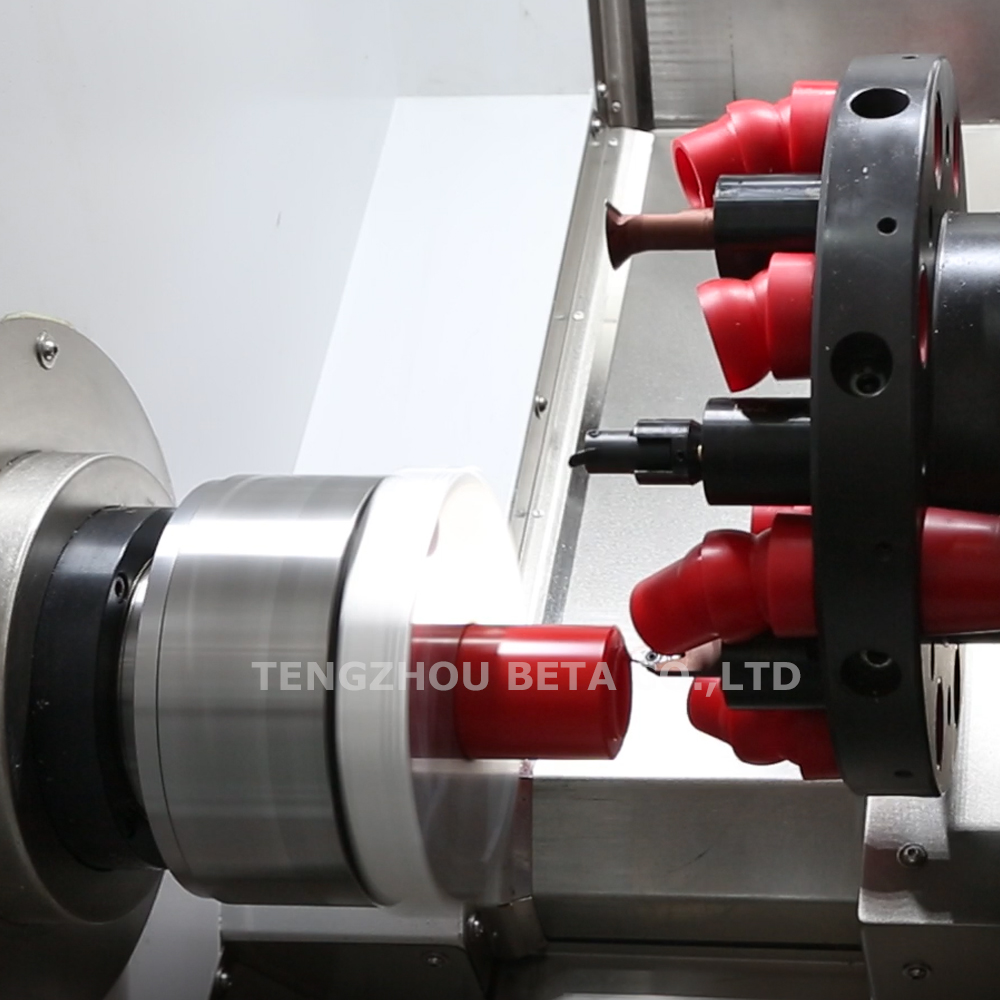
Relying on external suppliers for custom or replacement seals often leads to unacceptable downtime. High minimum order quantities frequently complicate simple maintenance tasks. Modern manufacturers cannot afford to wait weeks for critical components. You need parts immediately to keep operations running smoothly.
Transitioning to in-house production using a CNC Seal turning lathe represents a strategic operational shift. It eliminates your reliance on backordered inventory. You regain total control over your production timelines. Producing your own polymeric seals on demand drastically reduces supply chain bottlenecks.
This guide will walk you through the exact workflow required for in-house manufacturing. We explore critical material considerations and evaluation criteria. You will learn how to implement and optimize CNC seal cutting in a demanding manufacturing environment. Following these steps ensures precision, speed, and reliability on your shop floor.
Key Takeaways
Mastering a CNC seal turning lathe requires aligning specialized CAM software with specific polymer and elastomer properties.
Standardizing your standard operating procedure (SOP)—from billet chucking to toolpath execution—dramatically reduces scrap rates.
Evaluating a machine requires looking beyond base cost to factor in tooling flexibility, software integration, and spindle rigidity for soft materials.
Proper setup mitigates common processing risks like material deflection and thermal expansion in plastics.
The Business Case for In-House CNC Seal Machining
Inventory bloat ties up critical working capital. Many facilities stock thousands of seal sizes just in case a machine goes down. Supply chain delays further complicate this issue. Waiting for a custom U-cup can stall production for days. Investing in a dedicated machine requires upfront capital expenditure. However, the operational agility gained is immediate and substantial.
You must define what successful implementation looks like for your facility. Success usually means producing custom O-rings, U-cups, or wiper seals within 24 hours. Maintaining tight tolerances is also mandatory. A capable machine should output parts matching or exceeding OEM specifications. This capability transforms a sluggish maintenance department into a highly responsive unit.
Implementing new machinery brings distinct challenges. You must balance the learning curve against the operational rewards. Operator training takes time. Software adoption requires patience. Yet, the reward is total manufacturing independence. You no longer worry about discontinued supplier parts. You dictate your own production schedule.
Best Practices for Implementation
Identify the top 20 seal profiles your facility uses annually.
Train at least two operators to avoid single points of failure.
Stock a baseline inventory of raw polyurethane and PTFE billets.
Understanding the Mechanics of a CNC Seal Turning Lathe
A dedicated seal turning machine operates differently than a standard metal-working CNC. Metal cutting requires high torque to shear rigid alloys. Seal cutting demands higher spindle speeds and razor-sharp tools. Soft materials deform easily under pressure. Specific vacuum or soft-jaw chucking systems prevent material crushing. Securing flexible polymers requires finesse, not brute force.
Tooling requirements are highly specialized. You need razor-sharp cutting geometries designed specifically for elastomers like PU and NBR. Rigid plastics like PTFE and PEEK also require optimized tool angles. Standard carbide inserts meant for steel will cause tearing or melting. Elastomers need slicing actions. Friction must stay minimal to prevent thermal damage to the sealing lips.
Software and controllers play a massive role in usability. Modern seal machines utilize conversational programming. Specialized onboard software translates seal profiles directly into G-code. This eliminates the need for complex CAD/CAM modeling. An operator simply selects a U-cup profile, enters the dimensions, and generates the toolpath. This dramatically lowers the barrier to entry for new machinists.
Common Mistakes to Avoid
Using standard metal-cutting jaws to grip soft polyurethane.
Applying dull tools, which causes material push-off instead of clean cuts.
Ignoring the material hardness rating when selecting spindle speeds.
Standard Operating Procedure: Cutting Seals on a CNC Lathe
1. Material Preparation and Workholding
Selecting the correct semi-finished tube or billet is step one. Billet material must match the application requirements. Hydraulic seals often require durable polyurethane. Chemical applications might demand PTFE. Inspect the billet for voids or inclusions before chucking. Even minor material flaws ruin the final sealing lip.
Workholding strategies dictate your final accuracy. Flexible materials distort if clamped too tightly. Using soft jaws provides an even grip around the outer diameter. Step collets distribute clamping force uniformly. Internal expanding mandrels secure flexible tubes from the inside out. These methods secure the material without causing ovality. If the billet deforms in the chuck, the final part will be out of round.
2. Tool Selection and Calibration
You must select the correct cutting geometry based on material hardness. Shore A materials are soft and rubbery. They require extreme sharpness and high positive rakes. Shore D materials are harder plastics. They need robust cutting edges to handle higher cutting forces. Matching the tool to the durometer prevents surface tearing.
Setting tool offsets precisely is non-negotiable. Ensure zero runout for critical sealing lips. Any vibration or misalignment leaves chatter marks. Chatter compromises the seal's ability to hold fluid pressure. Use a tool presetter if available. Calibrate your tools at the start of every shift.
3. Programming the Toolpath
Generating the toolpath requires a strategic approach. Divide the process into roughing and finishing passes. Roughing passes remove bulk material quickly. Leave a small allowance for the final cut. Finishing passes create the required surface finish. Never attempt to cut the entire profile in one heavy pass.
Managing heat generation is crucial. Highlight the importance of appropriate feed rates and spindle speeds. High spindle speeds combined with slow feeds cause friction. Friction melts plastics like POM and PTFE. Optimize your feeds to create clean chips. Keep the tool moving to prevent heat buildup at the cutting edge.
4. Machining and Quality Control
Execute the cutting sequence logically. Start by machining the inner diameter. Next, shape the outer diameter. Proceed to grooving the internal channels. Finally, part off the finished seal from the billet. This sequence maintains maximum rigidity throughout the machining cycle.
Establish strict QC protocols. Use optical comparators to verify critical lip angles. Employ specialized low-force calipers to measure dimensions. Soft materials compress when measured with standard micrometers. Account for material relaxation. Elastomers often shrink slightly immediately after parting off. Measure the part again after it cools to room temperature.
Overcoming Common Material & Processing Challenges
Machining polymers introduces unique behavioral challenges. You must anticipate how the material will react to the cutting tool. Preparation prevents scrapped parts.
Material deflection is a major hurdle. Soft elastomers like Polyurethane or Nitrile rubber tend to bend away from the tool. This is known as "push-off." You must program toolpaths to account for this behavior. Take lighter finishing passes. Use razor-sharp tools to reduce cutting pressure. Sometimes, programming a slightly deeper cut compensates for the material flexing away.
Thermal expansion ruins tolerances. Plastics like PTFE and POM expand significantly during cutting due to friction. If machined while warm, they shrink once cooled. The resulting parts fall out of tolerance. Address this risk immediately. Apply appropriate coolant strategies where permissible. Increase your feed rate to remove heat through the chip. Avoid letting the tool dwell in one spot.
Managing stringy chips, or swarf, is frustrating. Plastic turning often produces continuous, stringy chips. These strings wrap around the chuck and mar the workpiece surface. They can also tangle in the tooling. Use peck turning cycles to break the chips. Adjust your feed rate to encourage chip snapping. Proper chip management keeps the machine running safely.
Material Troubleshooting Chart
The following table outlines solutions for common polymer machining issues.
Material Type
Common Machining Issue
Recommended Solution
Polyurethane (PU)
Material push-off; tearing
Use high positive rake angles; extremely sharp tooling.
Evaluation Framework: Shortlisting the Right Equipment
Choosing the right machine dictates your future production capabilities. Connect machine specifications directly to your production realities. A high-RPM spindle translates to cleaner cuts on soft rubbers. Specialized onboard software translates to significantly lower operator training time. Do not buy a machine solely based on a spec sheet. Understand how those specs solve your daily floor problems.
Assess scalability and your physical footprint. Determine if a compact, entry-level machine meets your current maintenance repair overhaul (MRO) needs. Smaller shops often just need on-demand replacement parts. Conversely, high-capacity machines suit OEM production lines. Large-scale manufacturing demands robust bar feeders and automated part catchers.
Evaluate vendor support and the tooling ecosystem. The best machine is useless without reliable support. Check the availability of replacement cutting tools. Ask about software updates and technical troubleshooting. Long-term machine uptime relies on a responsive vendor. You need quick answers when a machine throws an error code.
Determine your next-step actions carefully. Recommend booking a vendor demonstration. Ask to use your specific materials during the demo. Sending a proprietary PTFE billet for a test cut proves the machine's capability. Inspect the finished test piece thoroughly. This hands-on validation minimizes your investment risk.
Conclusion
Successful deployment of a CNC Seal turning lathe hinges on precise execution. You must combine rigid workholding, sharp tooling, and optimized toolpaths. Managing thermal expansion and material deflection ensures high-quality output. Mastering these elements transforms raw billets into flawless sealing solutions.
Transitioning to in-house production is an achievable, high-return initiative. When approached methodically, the risks diminish rapidly. The ability to produce custom parts on demand provides immense operational security. You eliminate supply chain anxiety entirely.
Take action today to optimize your facility. Evaluate your current seal procurement costs and lead times. Review machine specifications against your most common seal profiles. Contact an applications engineer for a comprehensive cycle-time analysis. Start building your independent manufacturing capabilities now.
FAQ
Q: How tight of a tolerance can a CNC seal turning lathe hold on soft elastomers?
A: Realistic tolerances typically range from ±0.02mm to ±0.05mm. Achieving this depends heavily on the material's durometer. Tooling sharpness and excellent temperature control are also critical. Softer rubbers are harder to hold to strict limits than rigid plastics like PTFE.
Q: Do I need an experienced CNC machinist to operate a seal making machine?
A: Not necessarily. Modern seal lathes often use proprietary, conversational software. They come with pre-loaded seal profiles. This significantly lowers the barrier to entry compared to traditional G-code programming. Operators can learn the interface quickly.
Q: Can a standard metal CNC lathe be used for cutting seals?
A: Yes, but caveats exist. Metal lathes often lack the high spindle speeds needed for soft polymers. They struggle with stringy chip management. Furthermore, they lack built-in seal profile software. Dedicated seal machines remain more efficient for high-mix production.
TENGZHOU BETA CO.,LTD is located in Tengzhou City, Shandong Province. Our company is a professional manufacturer and exporter of machine tool equipments and accessories.